
Dust containment supplies for hospital construction and ICRA projects
INLINE Distributing sells the parts contractors use to contain dust inside occupied hospitals and clinics: variable-speed HEPA machines from 250 to 700 CFM, the OmniGuard 6 differential pressure recorder, ZipWall poles with FoamRail tapeless seals, self-adhesive zippers, flame retardant poly, sticky mats and quiet HEPA vacuums. On an ICRA project the hospital's infection control team sets the precaution level, and INLINE supplies the parts for the barrier it asks for.
HEPA machine calculatorSolicitar cotizaciónDepartamento de pedidos 1-800-795-0933Find a branch
At a glance
- The Dri-Eaz HEPA 700 runs 275 to 700 CFM on 3.0 A at 42 lb, and its record calls it quiet enough for occupied hospitals.
- The Phoenix Guardian R weighs 33 lb and runs 250 to 500 CFM; the XPOWER X-2480A weighs 23.6 lb and moves up to 550 CFM.
- The OmniGuard 6 recorder resolves 0.001 in WC, prints on site, sounds a 95 dB alarm and sends job logs by cellular or Wi-Fi.
- A ZipWall FoamRail 2-pack seals up to 8 ft of barrier, and the SidePack seals two walls up to 9 ft high without tape.
- The Euroclean GD930 HEPA vacuum is listed at 57 dB(A), and the Dri-Eaz LGR 5000Li dehumidifier at 55 dB.
- Paste part numbers on Quick Order, send the job list through the quote form, or call INLINE's order desk at 1-800-795-0933.
Hospital job containment checklist by precaution level
Tick through this list as the job runs, from the bid to the last log entry. A row that names a precaution level applies once the hospital's infection control risk assessment puts the job at that level or above; the other rows apply to every job. Each row links the parts INLINE sells for that step, so the whole list can go into one quote request.
0 of 9 steps covered
Check off each line as you load the truck. Your checks stay in this browser on this device.
| Have it | Step | What it does | Parts INLINE sells |
|---|---|---|---|
| StepBefore you bid, every level | What it doesGets the precaution level, air-change rate, exhaust point, logging rules and barrier material from the hospital's plan before you order parts. | Parts INLINE sellsSend the job list through the quote form or paste part numbers on Quick Order | |
| StepFloor path and entry mat, dust control only and above | What it doesCovers the corridor floor along the debris route and picks up dust from boots and cart wheels at the work area door. | Parts INLINE sellsTrimaco Aqua Shield surface protector, Dirt Grabber frame with 30 sheets, Dirt Grabber refill mats | |
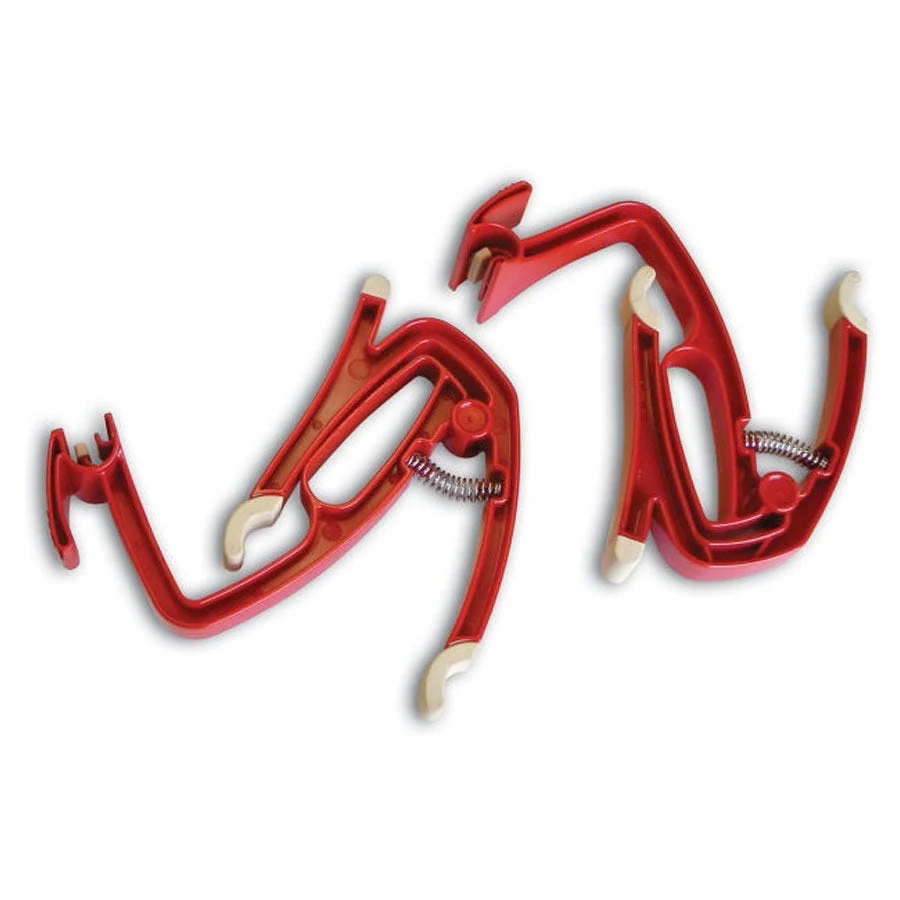
| StepBarrier, sealed barrier with negative air and above | What it doesHolds poly floor to ceiling, or to the deck for a full-height barrier, and seals the edges to walls and ceiling without tape on finished surfaces. | Parts INLINE sellsZipWall 12 ft poles, ZipWall 20 ft poles, FoamRail tapeless seal, SidePack wall mount kit, SideClamp wall mounts, flame retardant poly, Shurtape DS154, Scapa 133 poly tape | |
| StepEntry and anteroom, full-height barrier with an anteroom | What it doesTwo zippered poly walls a few feet apart make a small room where the crew takes off coveralls before stepping into the corridor. | Parts INLINE sellsZipWall heavy-duty zippers, Tyvek 400 coveralls, Supreno EC nitrile gloves, 3M 8511 N95 respirators | |
| StepNegative air, sealed barrier with negative air and above | What it doesMoves air out of the work area through HEPA filters and exhausts it to the point in the hospital's plan, so air at any gap flows inward. | Parts INLINE sellsDri-Eaz HEPA 700, ACSI FA700, Phoenix Guardian R, XPOWER X-2480A, INLINE 700, Dri-Eaz Layflat Ducting, replacement HEPA filters | |
| StepPressure log, full-height barrier with continuous pressure logging | What it doesRecords the pressure difference across the barrier, sounds an alarm at the limits you set from the plan and keeps the record the hospital asks to see. | Parts INLINE sellsOmniGuard 6 recorder, Dwyer Mark II 25 manometer, pressure recorders | |
| StepDaily cleanup, every level | What it doesPicks up dust inside the work area and at the entry every shift, with a quiet HEPA vacuum near occupied rooms. | Parts INLINE sellsEuroclean GD930 HEPA vacuum, ProTeam LV100 backpack HEPA vacuum, HEPA vacuums | |
| StepCloseout, every level | What it doesHEPA vacuums every surface top down, bags the poly and used filters inside the work area, and takes the barrier down after the hospital signs off. | Parts INLINE sellsMastercraft 15 gallon dry HEPA vacuum, Euroclean GD930 HEPA vacuum, disposable coveralls | |
| StepWater leak, if one happens | What it doesDries wet materials inside a sealed barrier with a low-noise dehumidifier and air mover while the negative air keeps running. | Parts INLINE sellsDri-Eaz LGR 5000Li dehumidifier, Dri-Eaz Stealth AV3000 air mover, dehumidifiers |
Send your list in a quote requestPaste part numbers into Quick Order
What changes when the job is inside an occupied hospital
The work is ordinary: open a ceiling, cut out wet drywall, replace a floor. The building around it is not. Occupied rooms sit on the other side of the poly, the corridor stays open, and the hospital's infection control team walks your barrier and reads your logs. Noise carries, tape pulls paint, and a big machine blocks a narrow corridor. So this list leads with compact, variable-speed HEPA units, tapeless seals and pressure recorders, and leaves the large 2,000 CFM machines to the negative air machines for abatement page.
INLINE Distributing sells parts, not a system: poles, poly, seals, zippers, HEPA machines and recorders for the barrier the hospital asks for.
Who sets the precaution level and what to ask before you bid
The hospital sets the precaution level, not the contractor. Its infection control risk assessment weighs the work against who is nearby and hands you a level, a permit and a log. Names and numbers vary by hospital, so here the levels are in words: dust control only; a sealed barrier with negative air; and a full-height barrier with an anteroom and continuous pressure logging. Get the plan in writing before you bid, because most of the parts list hangs on these answers.
- The precaution level, the permit posted at the entry, and who inspects the barrier and how often.
- The air-change rate and pressure difference the plan sets, and whether readings are logged by hand or by a recorder that prints or exports.
- Where exhaust may go, how far the duct can run, and which electrical circuits the crew may use.
- The barrier material and height the hospital accepts, including whether poly must be flame retardant and run to the deck above the ceiling.
- Work hours, noise limits next to occupied rooms, and the route and times for moving debris.
- What the hospital checks at closeout before the barrier comes down.
Containment checklist by precaution level
The checklist at the top runs in job order. This view runs by level and shows what each step up adds. Every level keeps everything from the one below it.
| Precaution level, in words | What the setup looks like | Parts it adds |
|---|---|---|
| Precaution level, in wordsDust control only | What the setup looks likeWork stays small, ceiling tiles go back the same shift, and dust is caught at the tool and at the door. | Parts it addsSticky mat frame and refills, a Euroclean GD930 or ProTeam LV100 HEPA vacuum, Aqua Shield on the floor path |
| Precaution level, in wordsSealed barrier with negative air | What the setup looks likePoly on poles closes off the work area, a HEPA machine pulls air out through its filters, and exhaust leaves through duct. | Parts it addsZipWall poles, FoamRail and SideClamp seals, flame retardant poly, DS154 and Scapa 133 tape, a zipper, a compact HEPA unit, Layflat duct |
| Precaution level, in wordsFull-height barrier with an anteroom and continuous pressure logging | What the setup looks likeThe barrier runs to the deck above the ceiling, a second zippered wall forms an anteroom, and a recorder logs the pressure difference around the clock. | Parts it addsZipWall 20 ft poles, a second zipper pack, an OmniGuard 6 recorder, a Dwyer Mark II 25 for a visual check, coveralls for the anteroom |
Barriers: poles, poly, tapeless seals and zipper entries
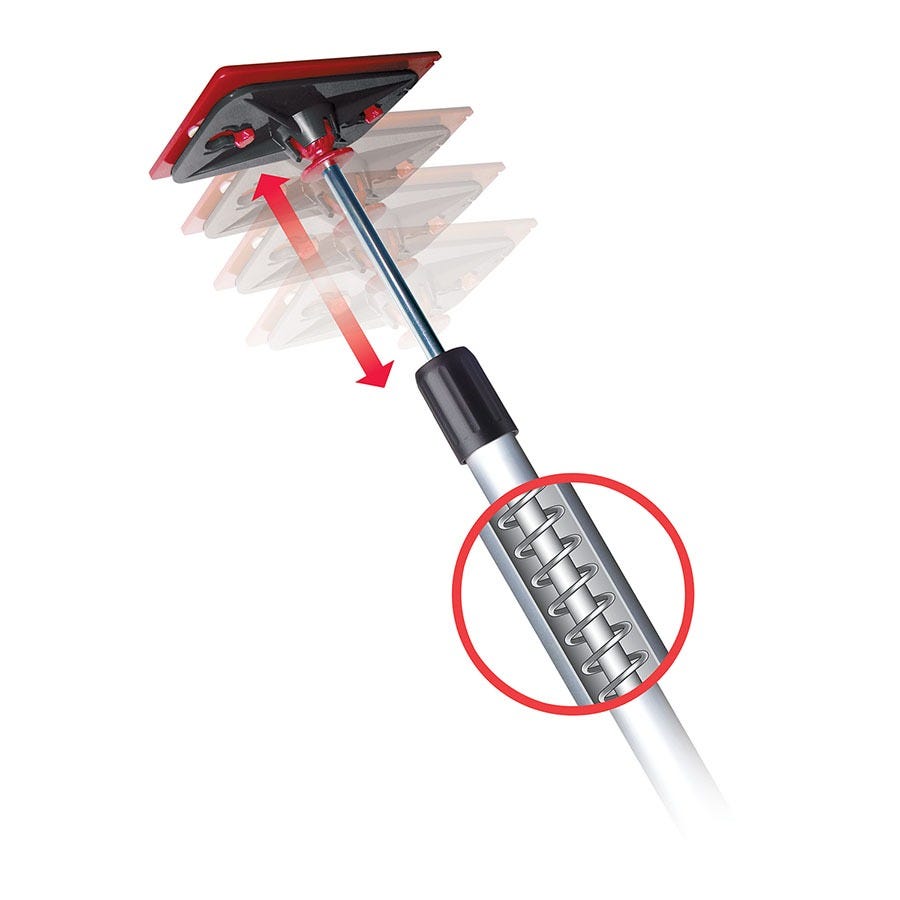
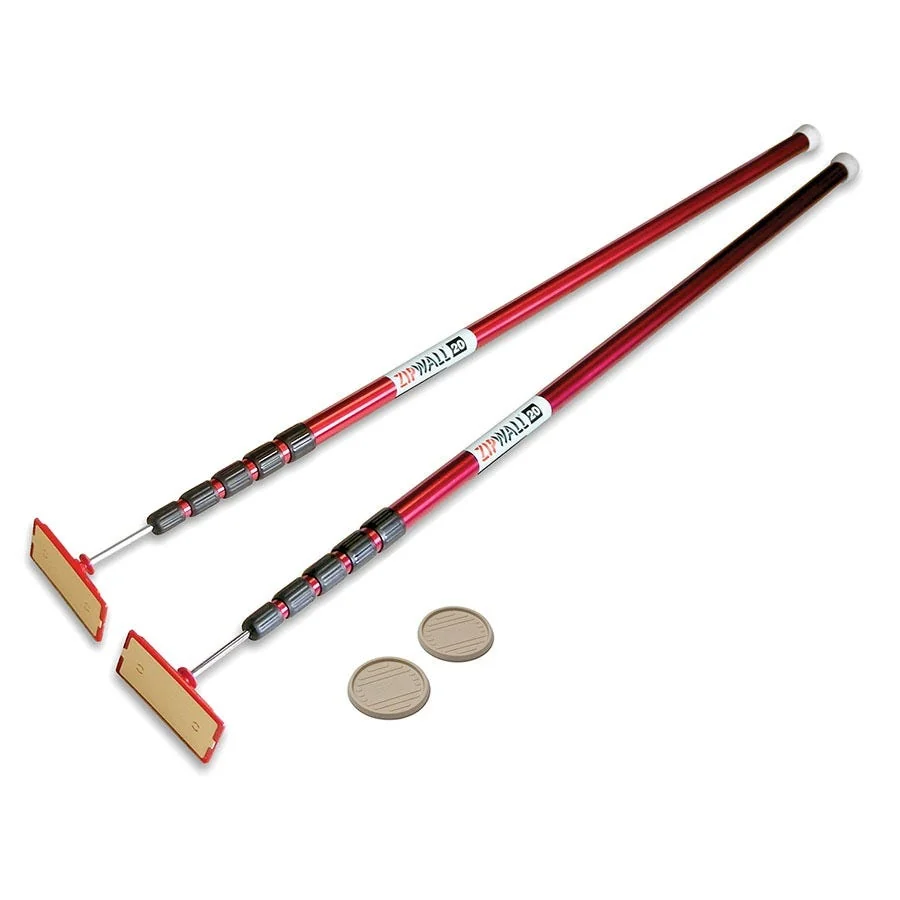
ZipWall 12 ft poles telescope from 4 ft 7 in to 12 ft and twist to lock, and the non-marking head and plate hold poly against a finished ceiling without fasteners. A 2-pack closes off a hallway about 10 ft wide; the 6-pack carries a barrier up to about 50 ft. For a full-height barrier past a dropped ceiling to the deck, the ZipWall 20 ft poles reach from 5 ft 2 in to 20 ft.
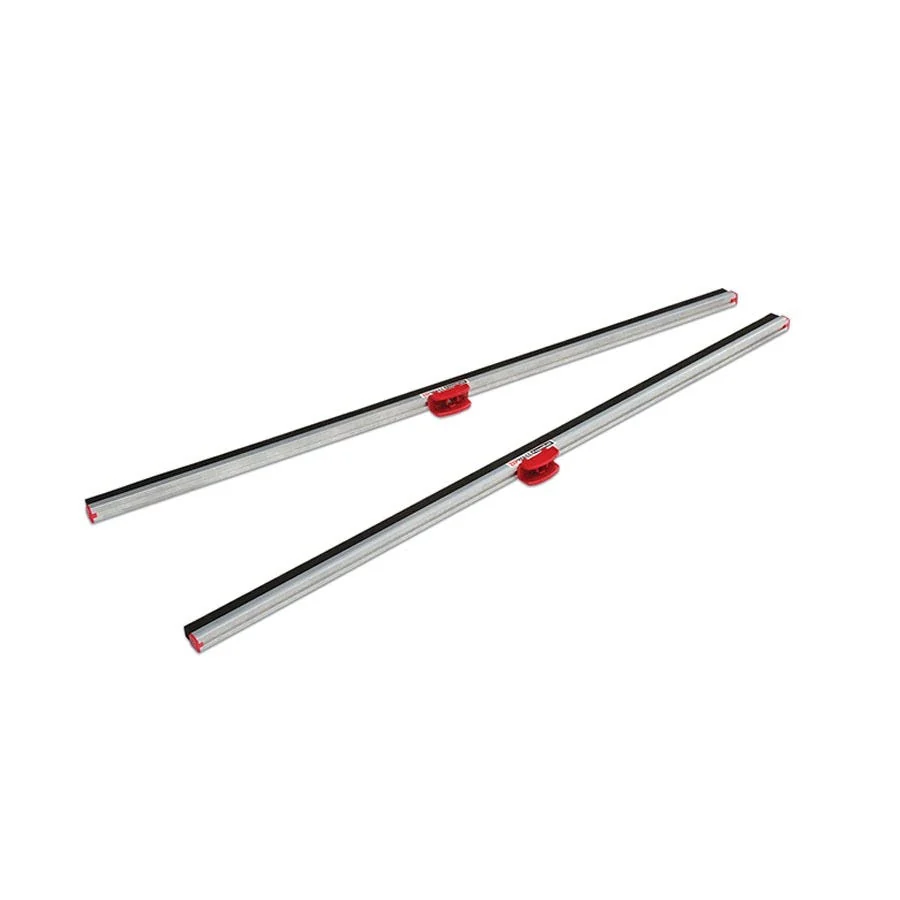
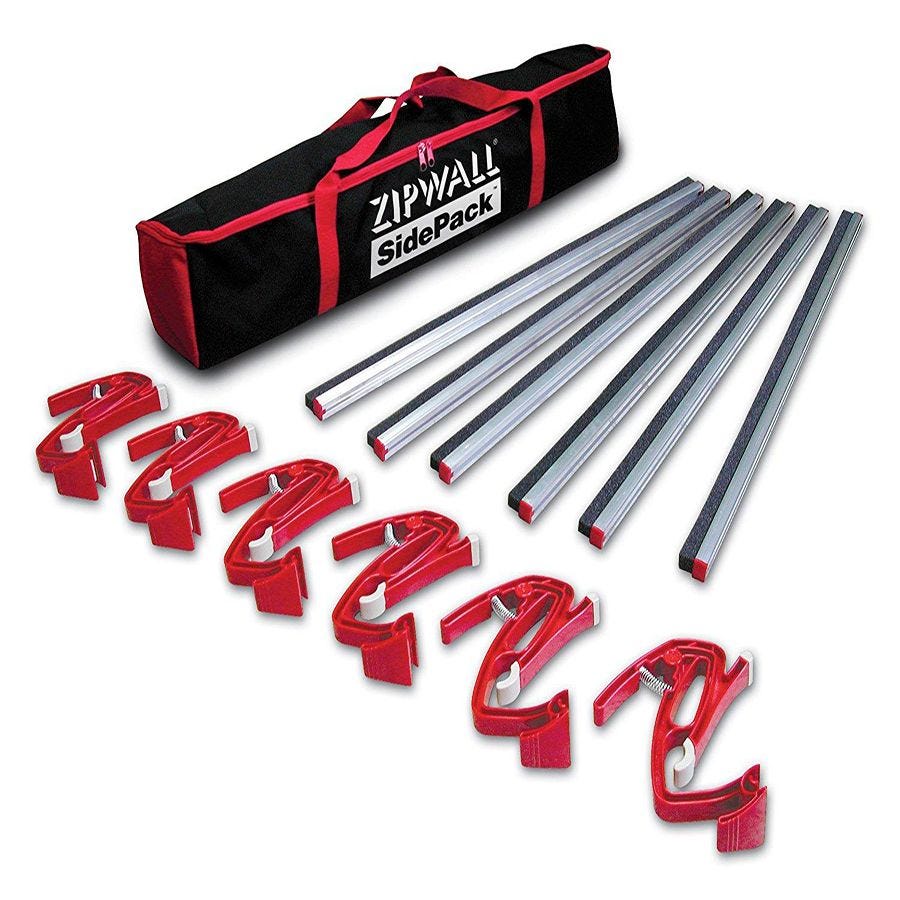
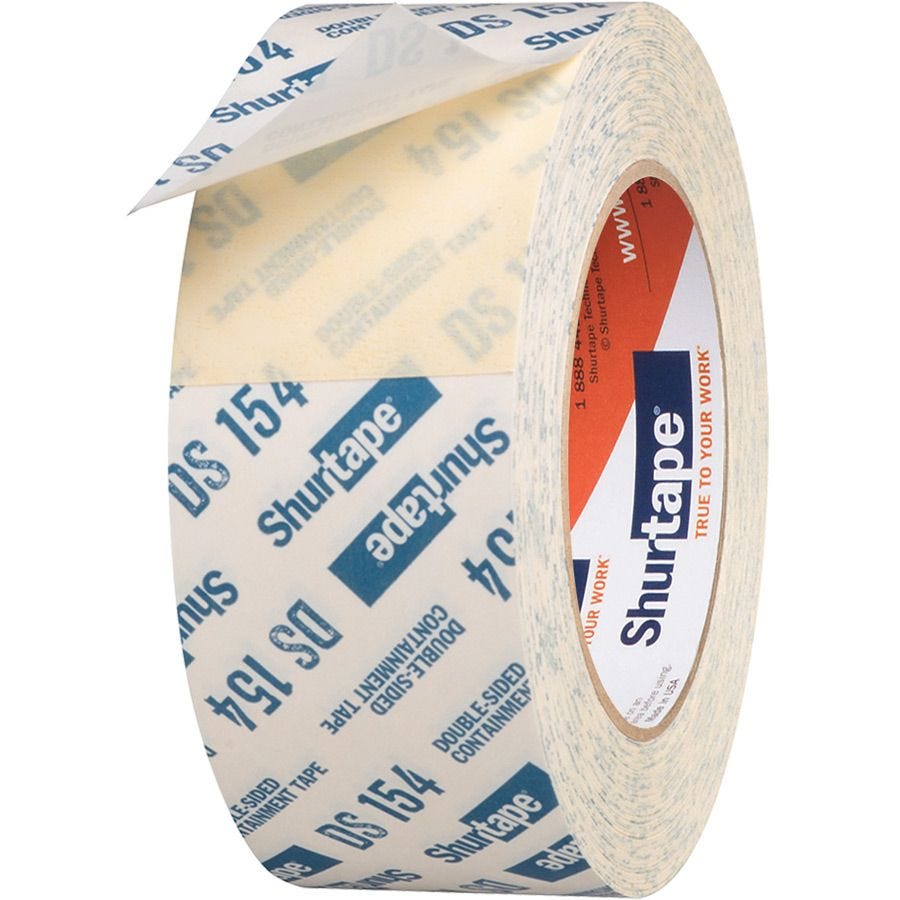
Edges are where barriers leak and where tape does damage. FoamRail is two 4 ft aluminum rails with compressed foam that press poly against the ceiling or wall, sealing up to 8 ft of barrier per pack. The SidePack seals two walls up to 9 ft high with six 3 ft FoamRails and six SideClamps. Where tape must touch a finished wall, Shurtape DS154 puts a painter's tape adhesive on the wall side, rated by the maker for up to 21-day clean removal, and an aggressive adhesive on the poly side.
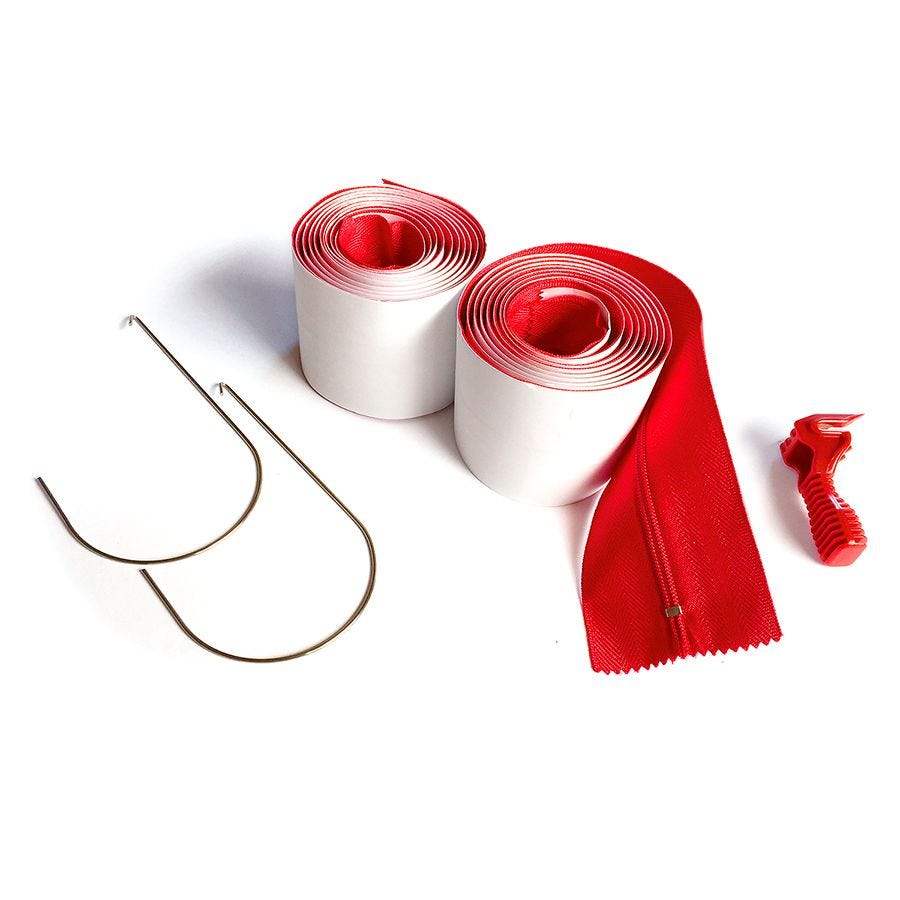
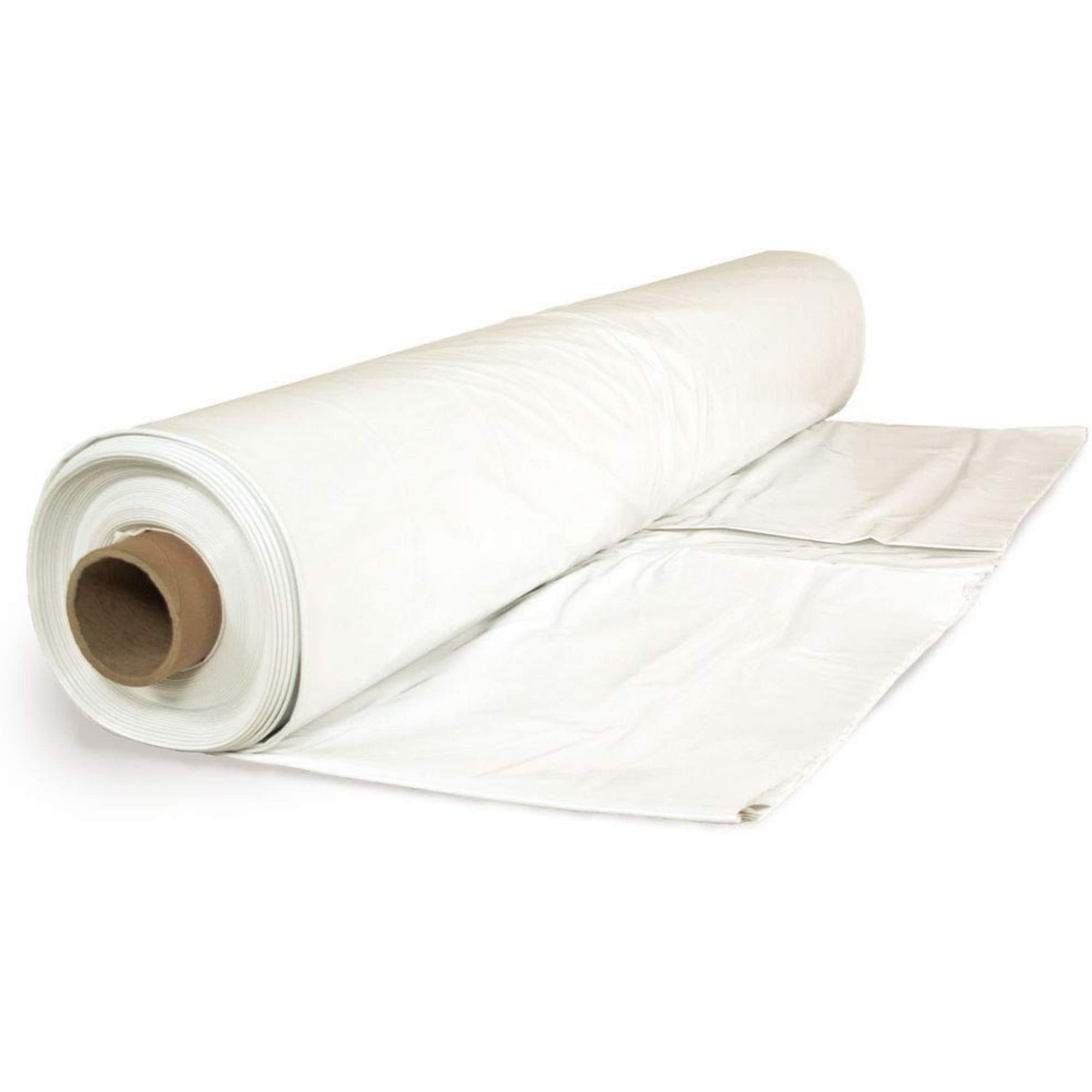
INLINE does not sell pre-built doors, rigid panels or anteroom kits; you add a zipper to the poly. The ZipWall heavy-duty zipper 2-pack holds two self-adhesive 7 ft by 3 in zippers, two flap hooks and a ZipperKnife that double-cuts the plastic; two zippered walls a few feet apart make the anteroom. Flame retardant poly comes in 4, 6, 10 and 12 mil, in 10, 12 and 20 ft widths, and Scapa 133 white serrated poly tape seals seams and penetrations inside the work area.
- 1. Occupied corridor outside the work area
- 2. Poly barrier on poles, run from the floor to the deck
- 3. Anteroom built from poles and poly, between the corridor and the work area
- 4. Two zipper entries: corridor to anteroom, anteroom to work area
- 5. Sticky mat on the corridor side of the exit
- 6. Air moves from the corridor through the anteroom into the work area, toward the machine
- 7. Compact HEPA machine inside the work area
- 8. Duct carries the exhaust out of the work area: exhaust to the point the hospital's plan names
- 9. Pressure recorder with two tubes across the barrier, one reading the corridor and one reading the work area
- 10. HEPA vacuum for cleanup inside the work area
- 11. Covered debris container, kept closed until it leaves the work area
Schematic, not to scale. The hospital's plan sets the layout, the air changes, the pressure difference and where the exhaust goes.
Negative air for a hospital work area: sizing compact HEPA machines
Size from the rate in the hospital's plan, not from habit. CFM needed equals work area volume in cubic feet times air changes per hour, divided by 60. When ceiling tiles come out, the space above them counts as part of the room. The calculator below counts each machine at 70 percent of its rated CFM, a planning allowance for loaded filters and a duct run, not a test figure. Large-machine sizing lives on the negative air machines for abatement page.
Worked example: a 20 x 15 x 9 ft work area holds 2,700 cu ft. At 6 air changes per hour, an example rate, use the one in your hospital's plan, it needs 2,700 x 6 / 60 = 270 CFM. A Dri-Eaz HEPA 700 counted at 70 percent of 700 CFM delivers about 490 CFM, so one machine covers it.
Small rooms are where variable speed earns its place. That same machine on high would change the room's air more than 15 times an hour, enough to pull poly inward and make zippers hard to open beside a quiet corridor. Turn it down toward 275 CFM on the HEPA 700, 250 on the Phoenix Guardian R or 400 on the ACSI FA700 and INLINE 700, then watch the recorder. None of these machine records gives a decibel figure, so if the hospital sets a noise limit, run the unit for facilities before the job starts.
Match the duct to the outlet before you order. Dri-Eaz Layflat Ducting opens to 8.3 in round, while the HEPA 700 record lists a 14 in duct size, so send the outlet size with your quote request. Run exhaust only to the point in the hospital's plan.
| Machine | Airflow and amps | Weight | Noise and controls, per the record |
|---|---|---|---|
| MachineDri-Eaz HEPA 700 (128983) | Airflow and amps275 to 700 CFM, variable; 3.0 A | Weight42 lb | Noise and controls, per the recordCalled quiet enough for occupied buildings such as hospitals; Command Hub app for remote monitoring and control |
| MachineACSI FA700 | Airflow and amps400 to 700 CFM, adjustable; 3.3 A | WeightNot listed | Noise and controls, per the recordMotor mounted on rubberized bushings to damp vibration and noise; Minihelic gauge, indicator lights and audible alarm for filter changes |
| MachinePhoenix Guardian R (4031350-1) | Airflow and amps250 to 500 CFM, variable; 2.4 A | Weight33 lb | Noise and controls, per the recordFilter-change indicator; built-in 15 A GFCI receptacle; runs flat or upright |
| MachineXPOWER X-2480A | Airflow and ampsUp to 550 CFM, 5 speeds; 2.8 A | Weight23.6 lb | Noise and controls, per the recordFilter change indicator; daisy-chain power outlets |
| MachineINLINE 700 | Airflow and amps400 to 700 CFM, variable | WeightNot listed | Noise and controls, per the recordChange-filter lamp; the INLINE700A version adds a pressure gauge and audible change-filter alarm; nests up to three units for storage |
How many HEPA machines does a hospital work area need
Enter the work area size, the air change rate from the hospital's plan and the machine you plan to run. The starting example is a 20 x 15 x 9 ft work area at 6 air changes per hour.
- Delivered per unit
- 490 CFM (700 rated x 70 percent)
- Power
- 3 A running for 1 working unit. 3 A listed: up to 4 units share a 15 A circuit at 12 A continuous, 1 circuit.
How this is calculated: 20 x 15 x 9 = 2,700 cu ft. 2,700 x 6 / 60 = 270 CFM. 700 x 70 percent = 490 CFM per unit. 270 / 490 = 0.55, rounded up to 1. 1 x 490 x 60 / 2,700 = 10.9 air changes per hour.
- INLINE 700, up to 700 CFM1 unit, 10.9 air changes per hour
- ACSI FA700, up to 700 CFM1 unit, 10.9 air changes per hour, 1 circuit
- XPOWER X-2480A, up to 550 CFM1 unit, 8.6 air changes per hour, 1 circuit
- Phoenix Guardian R, up to 500 CFM1 unit, 7.8 air changes per hour, 1 circuit
Request a quote for these machines
This is a planning estimate from listed ratings. The hospital's infection control risk assessment sets the air changes, the pressure difference and the logging. Circuits are planned at 80 percent of the breaker rating, 12 A on a 15 A circuit. Check the pressure reading once the machines run.
Pressure monitoring and keeping the log
The recorder log is the record the hospital reads. A recorder reads the pressure difference across the barrier through a tube from inside the work area, sounds an alarm past the limits you set from the plan, and prints or sends the record. Hang the Dwyer Mark II 25 at the entry for a quick visual check, but log from a recorder: its 0 to 3 in WC scale is accurate to 3 percent of full scale, about 0.09 in WC, which is coarse next to the small differences a work area runs at.
The gauge on a machine is a different reading. The ACSI FA700 record ties its Minihelic gauge, lights and alarm to filter changes, and the INLINE700A pairs its gauge with a change-filter alarm. Treat them as filter checks, not as the barrier reading in the log.
The OmniGuard 6 runs 4 to 6 hours on its battery, so a tripped circuit does not have to leave a gap in the log. Other recorders are on the pressure recorders shelf.
| Instrument | What it reads | How it keeps the record | Alerts |
|---|---|---|---|
| InstrumentOmniGuard 6 (511-OG6), Engineering Solutions | What it readsPlus or minus 0.250 in WC; accuracy 0.003 in WC or 1 percent of reading; 0.001 in WC resolution | How it keeps the recordBuilt-in thermal printer, USB export, about 6 months onboard, job logs and status reports by cellular or Wi-Fi | Alerts95 dB alarm at programmable high and low limits |
| InstrumentDwyer Mark II 25 manometer | What it readsInclined scale, 0 to 3 in WC; accuracy 3 percent of full scale | How it keeps the recordNone; read it and write it down | AlertsNone |
| InstrumentGauge built into the ACSI FA700 | What it readsFilter loading across the machine, 0 to 5.0 in of water | How it keeps the recordNone | AlertsIndicator lights and audible alarm |
| InstrumentGauge built into the INLINE700A | What it readsDifferential pressure gauge on the machine | How it keeps the recordNone | AlertsAudible change-filter alarm |
Entry control, daily cleanup and closeout
The entry is where dust leaves on boots and cart wheels. A Trimaco Dirt Grabber frame is 26 x 32 in with a 30-layer 24 x 30 in mat; peel off the top sheet when it loads up, and refill from a case of 120 sheets. It covers a doorway; INLINE does not carry corridor-size mats. Along the debris route, Trimaco Aqua Shield is a 10 mil, 36 in by 393 ft slip-resistant roll, about 1,179 sq ft.
Inside the barrier the crew wears DuPont Tyvek 400 coveralls with an attached respirator-fit hood and boots, M to 4XL, and takes them off in the anteroom before walking the corridor. Microflex Supreno EC gloves are 11.6 in long with an extended cuff and 5.5 mil palm, and the record says they resist sticking to tape. 3M 8511 N95 respirators come 10 to a box. INLINE does not carry shoe covers, bouffants or isolation gowns.
- Daily: HEPA vacuum the floor inside the barrier and at the entry with the Euroclean GD930, listed at 57 dB(A), 17.64 lb and 4 gal.
- Overhead: the ProTeam LV100 backpack HEPA vacuum rides on the operator's back for ladder and above-ceiling work.
- Heavy demolition dust: the Mastercraft 15 gallon dry HEPA vacuum comes with a 10 ft hose, 5 ft aluminum wand and 14 in floor brush tool.
- Closeout: vacuum top down, bag used pre-filters and the poly inside the work area, and leave the negative air running until the hospital has inspected.
- File the recorder log, filter-change notes and closeout sign-off together.
Water leaks and wet materials inside a hospital
A leak over an occupied floor becomes a containment job once wet drywall or ceiling tile has to come out: build the same barrier, run negative air, and dry inside it. The Dri-Eaz LGR 5000Li lists 55 dB, removes up to 80 pints a day at AHAM conditions and 164 at saturation on 5.1 A, and weighs 69 lb. The Dri-Eaz Stealth AV3000 is an axial air mover the maker describes as quieter than traditional axial fans, 2,600 CFM on 2.7 A at 27 lb, with variable speed.
Air movers stir dust, so aim them at wet surfaces inside the barrier, never at the zipper. For a larger loss, see the restoration supplies INLINE sells.
Products mentioned on this page
Questions contractors ask
What is an ICRA project, and who decides how much containment it needs?
An ICRA project is hospital work that comes with the hospital's infection control risk assessment. Its infection control team decides the precaution level, from dust control only up to a full-height barrier with an anteroom and continuous pressure logging, and sets the air-change rate and logging rules. INLINE Distributing supplies the parts; it does not set or sign off the level.
Is a manometer enough, or do I need a pressure recorder on a hospital job?
Use a recorder whenever the hospital wants continuous logging, which is common at the higher precaution levels. The OmniGuard 6 resolves 0.001 in WC, prints on site and sends logs by cellular or Wi-Fi. The Dwyer Mark II 25 is an inclined manometer with a 0 to 3 in WC scale and 3 percent full-scale accuracy: good for a glance at the entry, too coarse to stand as the log.
How do I build an anteroom without a pre-built door or panel kit?
Build it from the same parts as the barrier. Set a second line of ZipWall poles a few feet inside the first, hang flame retardant poly, seal the edges with FoamRail or SideClamps, and add a ZipWall heavy-duty zipper to each wall. Each 2-pack holds two 7 ft zippers, flap hooks and a ZipperKnife. INLINE does not sell pre-built doors, rigid panels or anteroom kits.
Which HEPA air scrubber is quietest for work next to occupied rooms?
No air scrubber record INLINE carries lists a decibel figure, so they cannot be ranked by number. The Dri-Eaz HEPA 700 record calls it quiet enough for occupied buildings such as hospitals, and the ACSI FA700 mounts its motor on rubberized bushings to damp vibration and noise. Running a variable unit at the lowest speed that holds the reading also cuts noise.
Can I seal a dust barrier to finished hospital walls without tape?
Yes. ZipWall FoamRail presses poly against the surface with compressed foam on 4 ft aluminum rails, and the SidePack seals two walls up to 9 ft high with FoamRails and SideClamps, no tape involved. Where tape cannot be avoided, Shurtape DS154 has a painter's tape adhesive on the wall side, rated by the maker for up to 21-day clean removal.
Where should a negative air machine exhaust on a hospital job?
Wherever the hospital's plan says, so ask before you bid. INLINE sells Dri-Eaz Layflat Ducting, 4 mil poly duct cut to length from a 500 ft roll, to carry exhaust to that point; check that it fits your machine's outlet first. Keep the run short and straight. INLINE does not carry rigid or insulated duct, duct collars or window exhaust panels.
Does flame retardant poly make a barrier acceptable to the hospital?
That is the hospital's call, not the poly's. INLINE lists its flame retardant poly by thickness and size, from 4 to 12 mil and 10 to 20 ft wide. If the plan or the fire marshal names a barrier material, send that wording with your quote request so the roll can be matched to it.
Can I dry a hospital water leak with the negative air still running?
Yes. Keep the barrier sealed and the HEPA machine exhausting through its filters while you dry inside it. A low-noise dehumidifier such as the Dri-Eaz LGR 5000Li, listed at 55 dB, and a quieter air mover such as the Stealth AV3000 suit an occupied floor. Aim the air movers at wet surfaces, not at the zipper.