
Commercial dehumidifiers for water damage restoration and mold remediation
For water damage restoration and mold remediation at room temperature, use a low grain refrigerant (LGR) dehumidifier. Size it by dividing the drying chamber's cubic feet by the class factor (100, 50 or 40) to get total AHAM pints per day. In cold or very dry spaces, use a desiccant. INLINE Distributing sells Dri-Eaz, Phoenix and INLINE Force One units rated 64 to 170 AHAM pints, plus the Dri-Eaz DriTec 4000i desiccant.
Dehumidifier sizing calculatorRequest a quoteOrder desk 1-800-795-0933Find a branch
At a glance
- LGR sizing: cubic feet divided by the class factor (100, 50, 40 and 40 for classes 1 to 4) gives total AHAM pints per day.
- Desiccant sizing: cubic feet times air changes per hour (1, 2, 3 and 3 by class), divided by 60, gives the airflow needed in CFM.
- Compare units on AHAM pints (80°F, 60% RH). The Dri-Eaz LGR 5000Li lists 80 at AHAM and 164 at saturation (90°F, 90% RH).
- Listed amp draws on INLINE's refrigerant and LGR units run from 4.7 (Dri-Eaz DrizAir 1400) to 10 (INLINE Force One LGR 155).
- The Dri-Eaz DriTec 4000i desiccant moves about 395 CFM and can run on its back in low crawl spaces.
- Order online, paste or upload part numbers on the Quick Order page, send a list through the quote form, or call 1-800-795-0933.
Dehumidifiers INLINE sells, side by side
Each row gives the type, pints per day with the condition the maker states (AHAM, saturation or none given), airflow in CFM, amp draw and weight, linked to the product page. Compare rows on the AHAM column and treat a figure with no stated condition as a ceiling. Replacement filters and the Injectidry drip pan follow the table.
| Dehumidifier | Type | Pints per day | Airflow | Power | Weight |
|---|---|---|---|---|---|
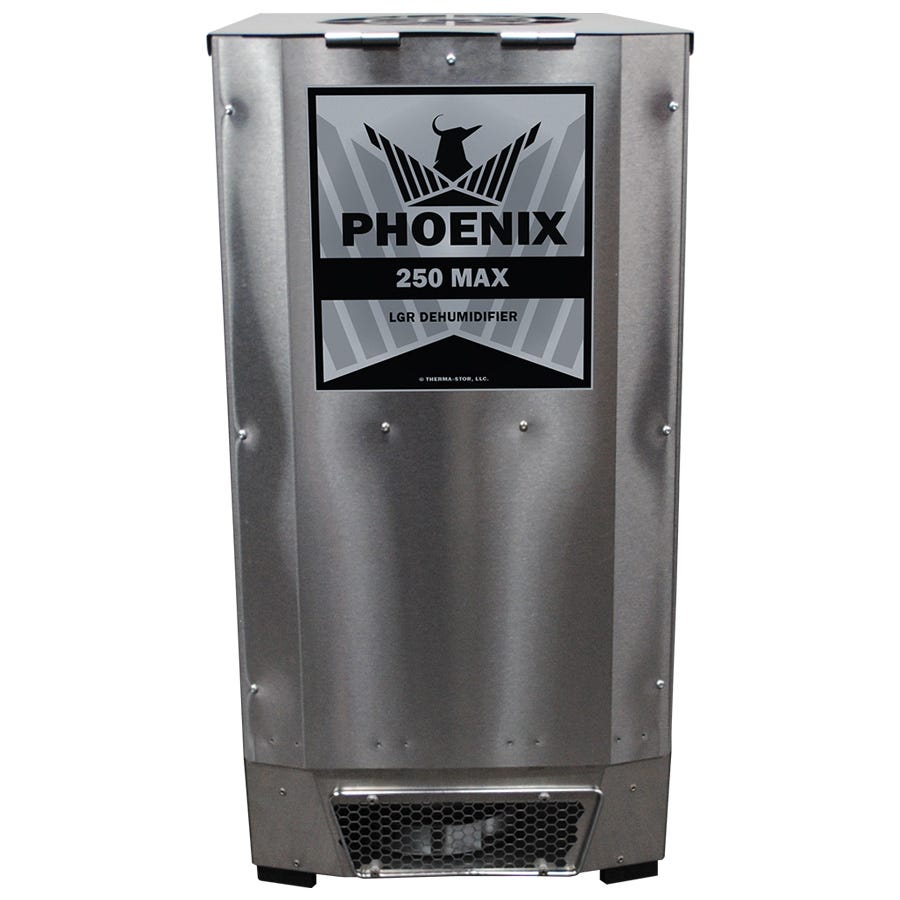
| PhoenixPhoenix 250 MAX | TypeLGR | Pints per day145 at AHAM | Airflow365 CFM | Power120 V, 8.2 A | Weight119 lb |
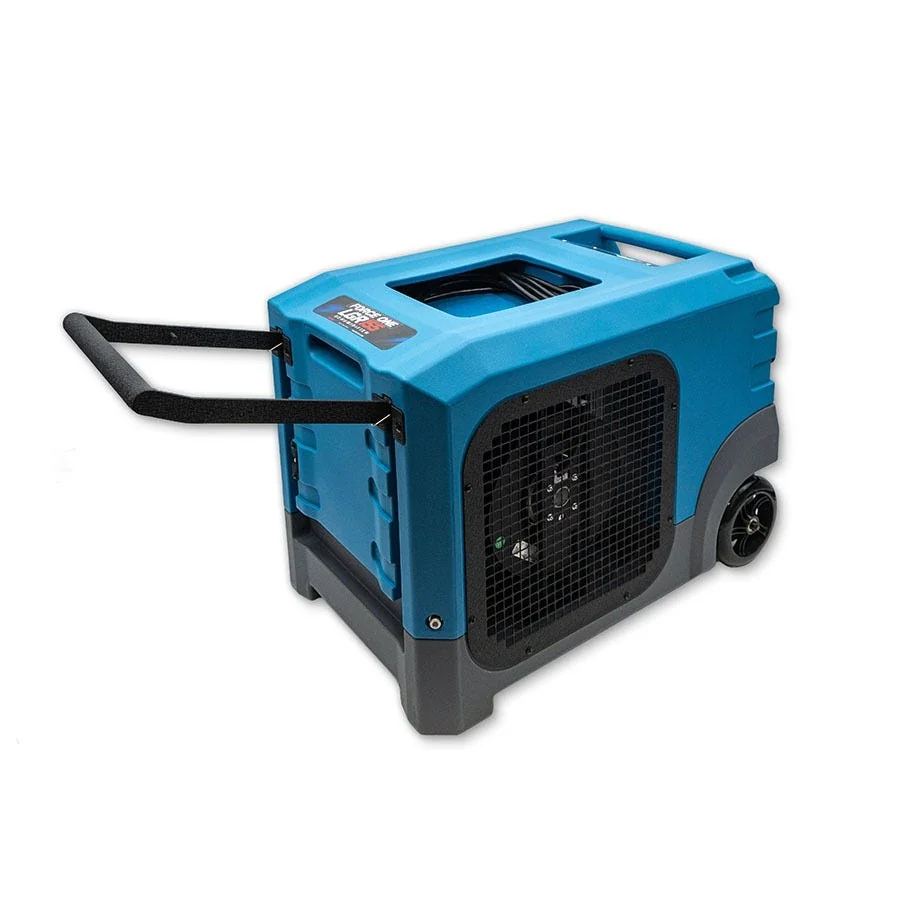
| INLINEINLINE Force One LGR 155 | TypeLGR | Pints per day155 at AHAM | Airflow300 CFM | Power10 A | Weight88 lb |
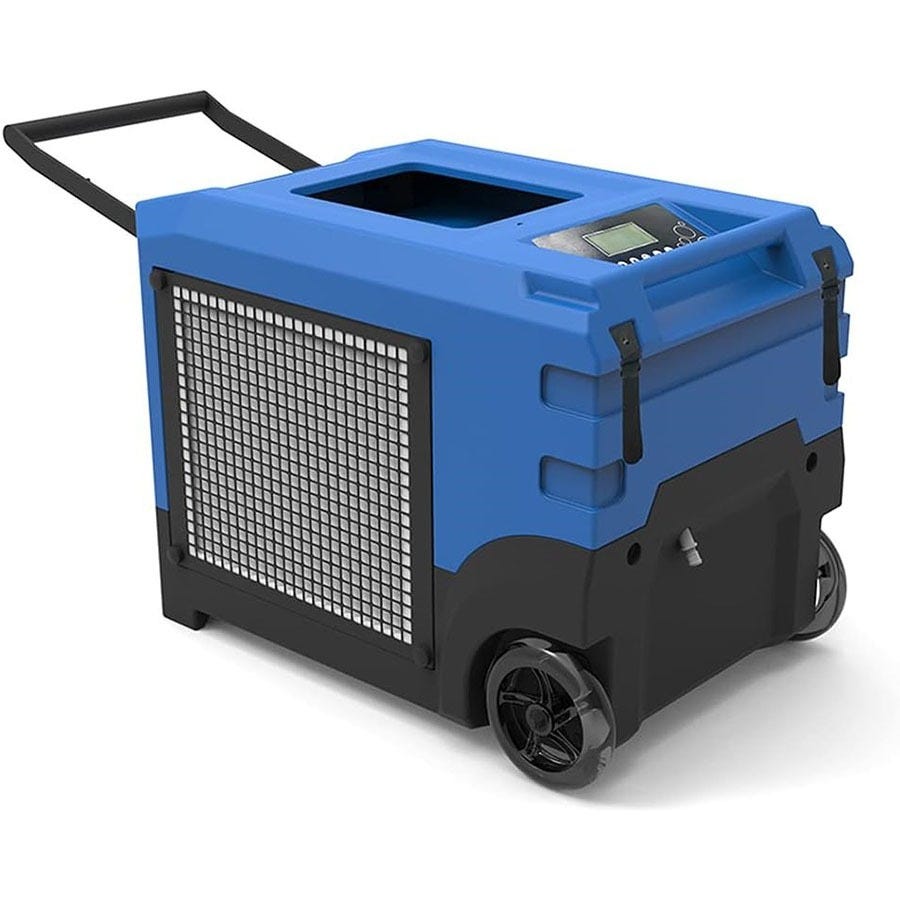
| ASDASD-155 | TypeLGR | Pints per day155 at 80°F, 60% RH | Airflow300 CFM | Power10 A | WeightNot listed |
| PhoenixPhoenix DryMAX XL ProAlso in red | TypeLGR | Pints per day135 at AHAM | Airflow300 CFM | Power110 to 120 V, 6.7 A | Weight85 lb |
| Dri-EazDri-Eaz LGR 7000XLiAlso in black | TypeLGR | Pints per day130 at AHAM | Airflow280 CFM | Power115 V, 8.8 A | Weight106 lb |
| PhoenixPhoenix R250 | TypeLGR | Pints per day130 at AHAM | Airflow310 CFM | Power120 V, 7.4 A | Weight109 lb |
| PhoenixPhoenix DryMAX XLAlso in red | TypeLGR | Pints per day125 at AHAM | Airflow300 CFM | Power110 to 120 V, 7.7 A | Weight85 lb |
| Dri-EazDri-Eaz LGR 3500 | TypeLGR | Pints per dayUp to 170 at AHAM | AirflowNot listed | PowerNot listed | WeightNot listed |
| Dri-EazDri-Eaz LGR 6000LiAlso in black | TypeLGR | Pints per day100 at AHAM | Airflow320 CFM | Power115 V, 6.5 A | Weight99 lb |
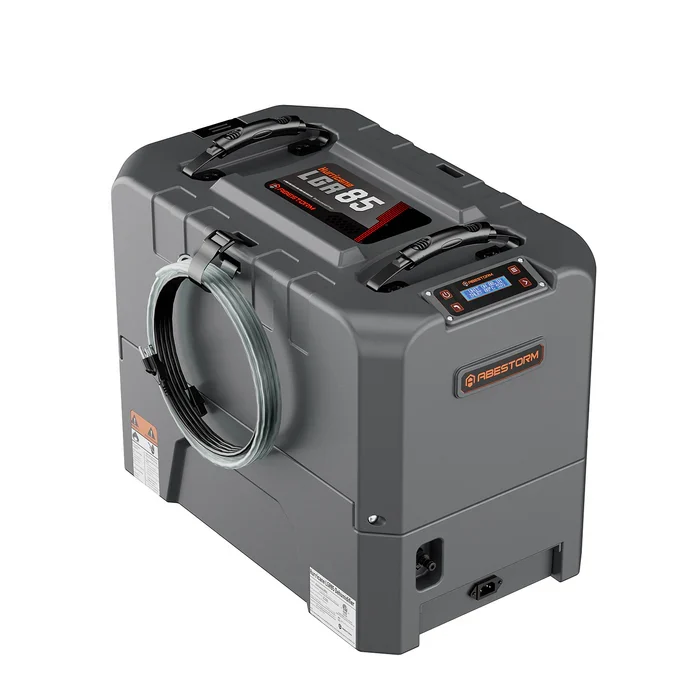
| INLINEINLINE Force One LGR 85 | TypeLGR | Pints per day85 at AHAM, 154 at 90°F, 90% RH | Airflow206 CFM | Power5.77 A | Weight70 lb |
| ASDASD-85Also in red | TypeLGR | Pints per day85 at 80°F, 60% RH | Airflow206 CFM | Power5.77 A | WeightNot listed |
| Dri-EazDri-Eaz LGR 5000Li | TypeLGR | Pints per day80 at AHAM, 164 at 90°F, 90% RH | Airflow215 CFM | Power115 V, 5.1 A | Weight69 lb |
| Dri-EazDri-Eaz Revolution | TypeLGR | Pints per day80 at AHAM | Airflow180 CFM | Power115 V, 5.5 A | Weight63 lb |
| PhoenixPhoenix DryMAX BLEAlso in red | TypeLGR | Pints per day80 at AHAM | Airflow170 CFM | Power120 V, 5.5 A | Weight63 lb |
| Dri-EazDri-Eaz LGR 2800i | TypeRefrigerant | Pints per day130 at AHAM, 200 at 90°F, 90% RH | Airflow160 CFM | Power115 V, 8 A | Weight160 lb |
| Dri-EazDri-Eaz DrizAir 1400 | TypeRefrigerant | Pints per day64 at AHAM, 130 at 90°F, 90% RH | Airflow215 CFM | Power115 V, 4.7 A | WeightNot listed |
| Dri-EazDri-Eaz DrizAir 1200 | TypeRefrigerant | Pints per dayUp to 120, conditions not stated | AirflowNot listed | PowerNot listed | WeightNot listed |
| Dri-EazDri-Eaz DriTec 4000i | TypeDesiccant | Pints per dayUp to 118, conditions not stated | Airflow395 CFM | PowerNot listed | WeightNot listed |
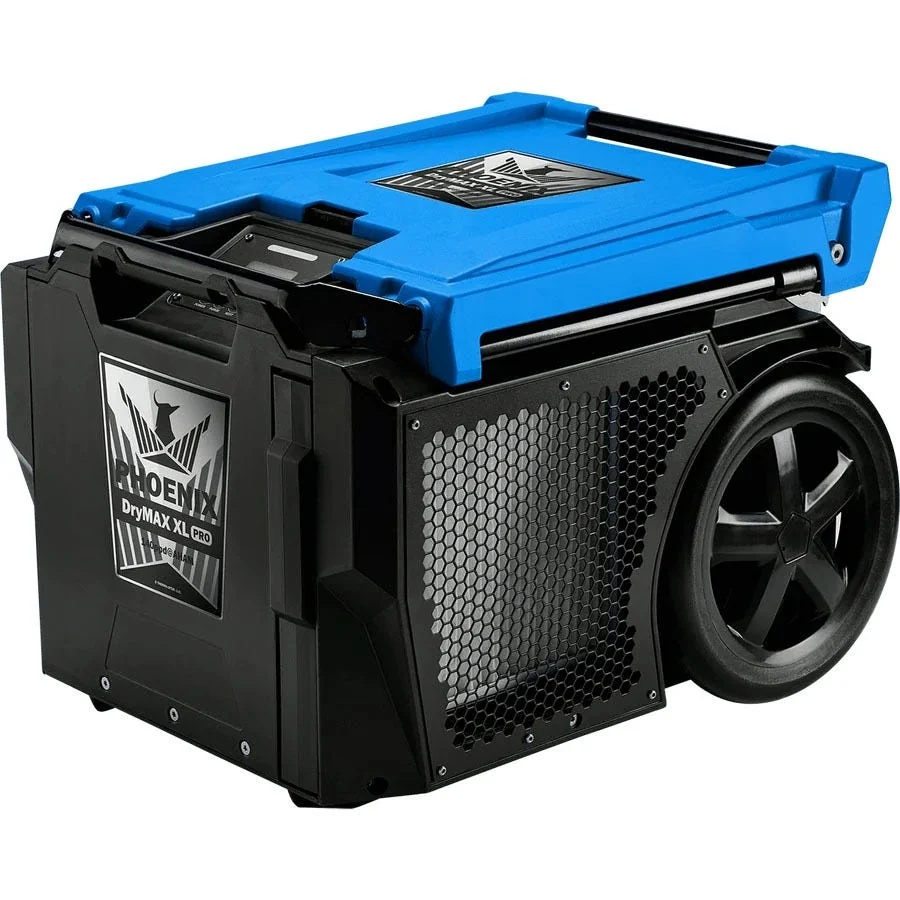
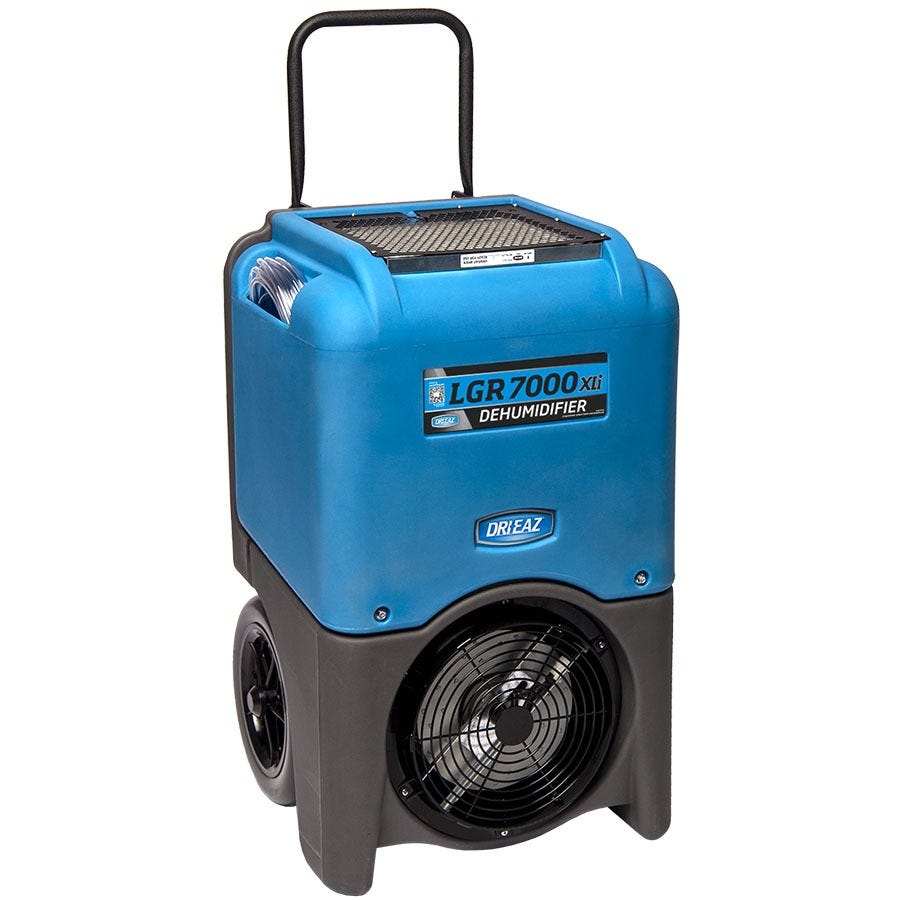
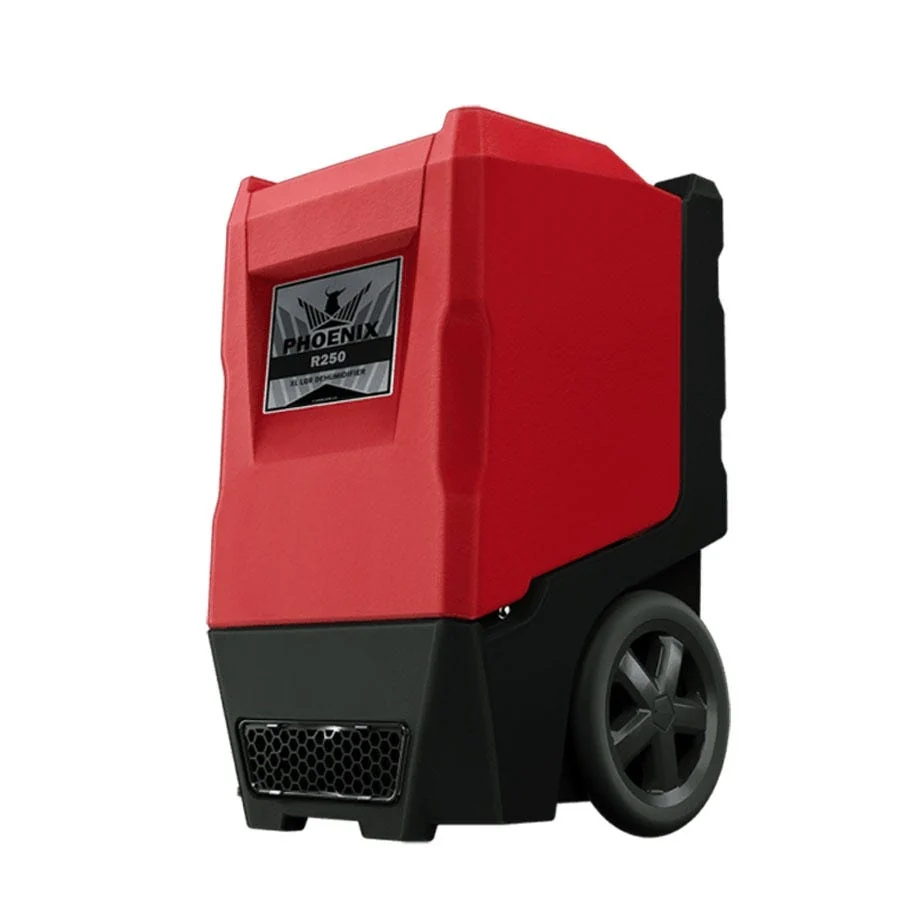
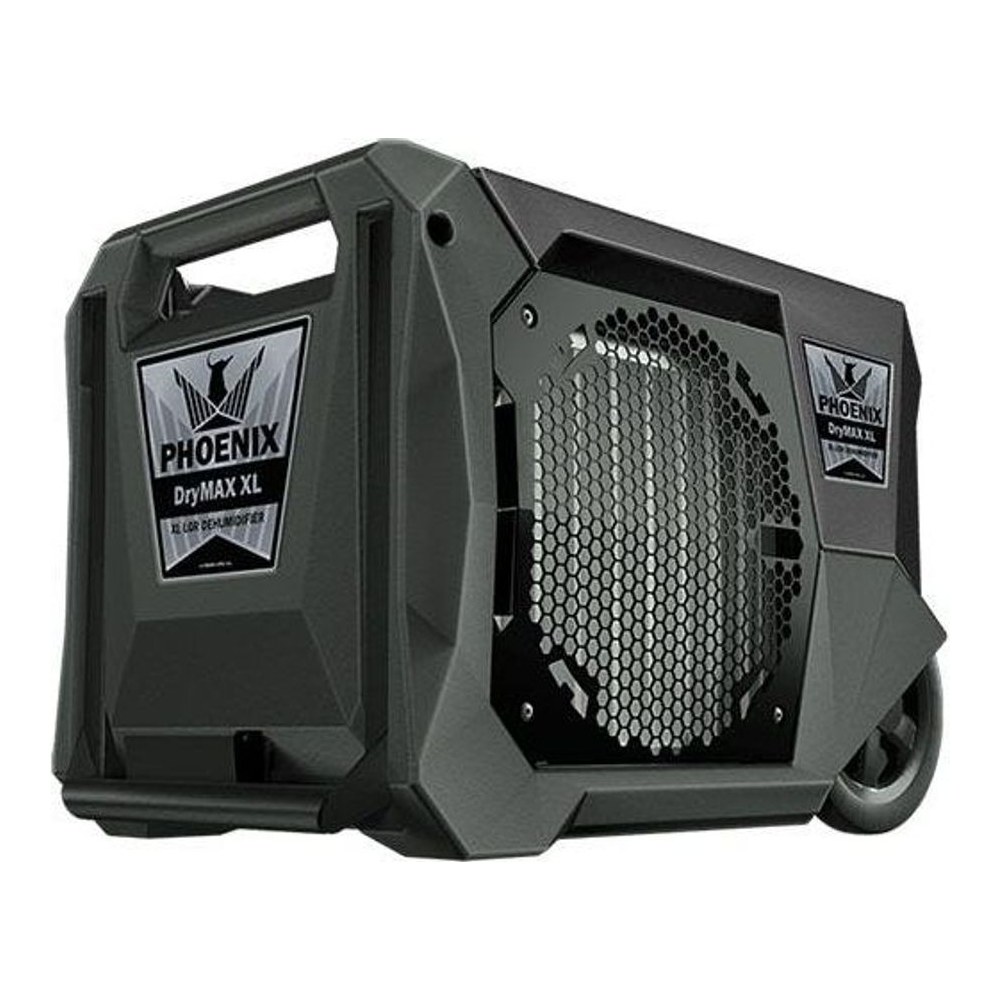
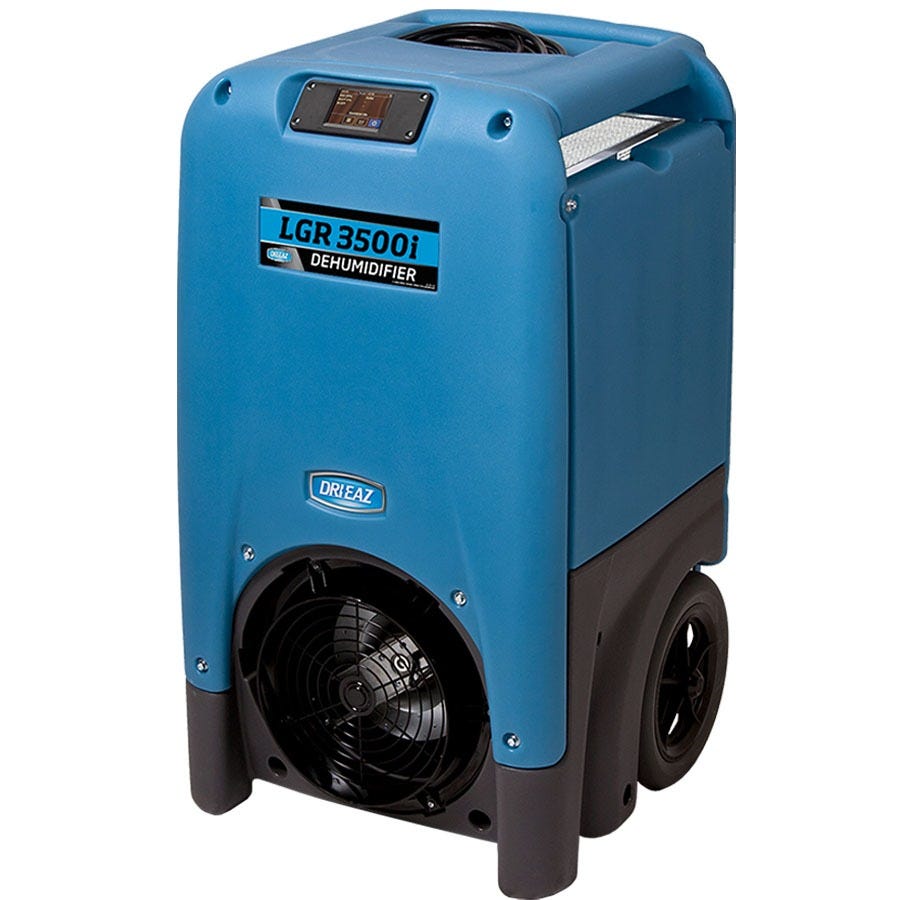
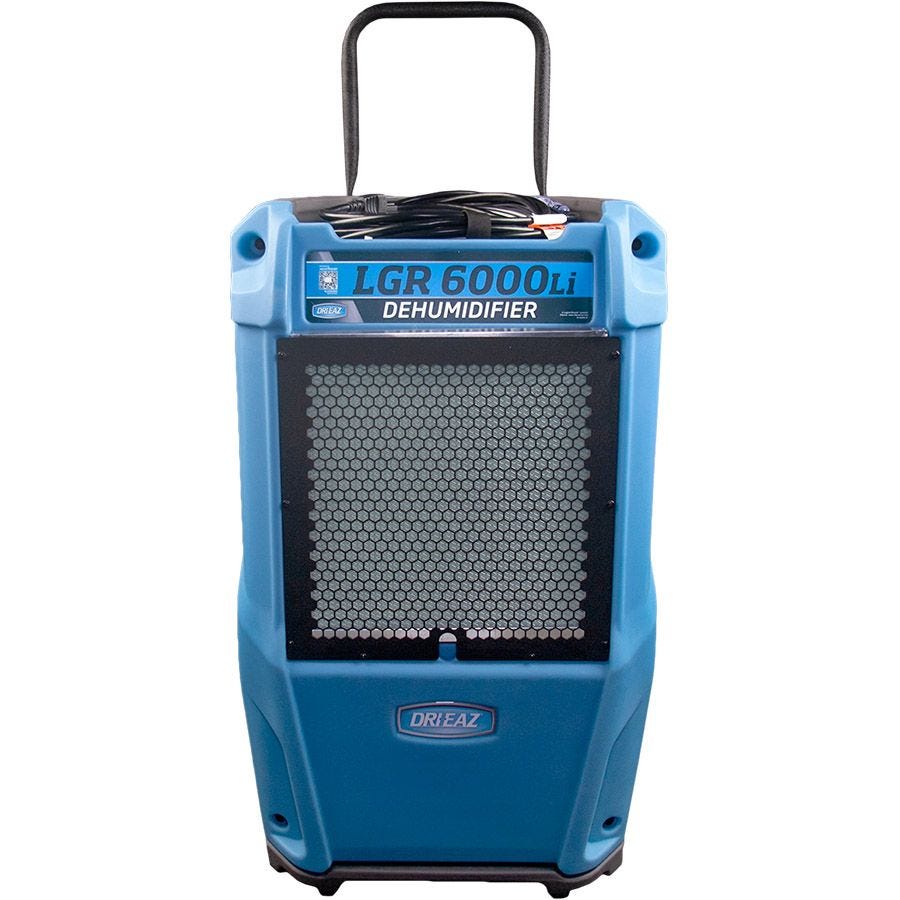
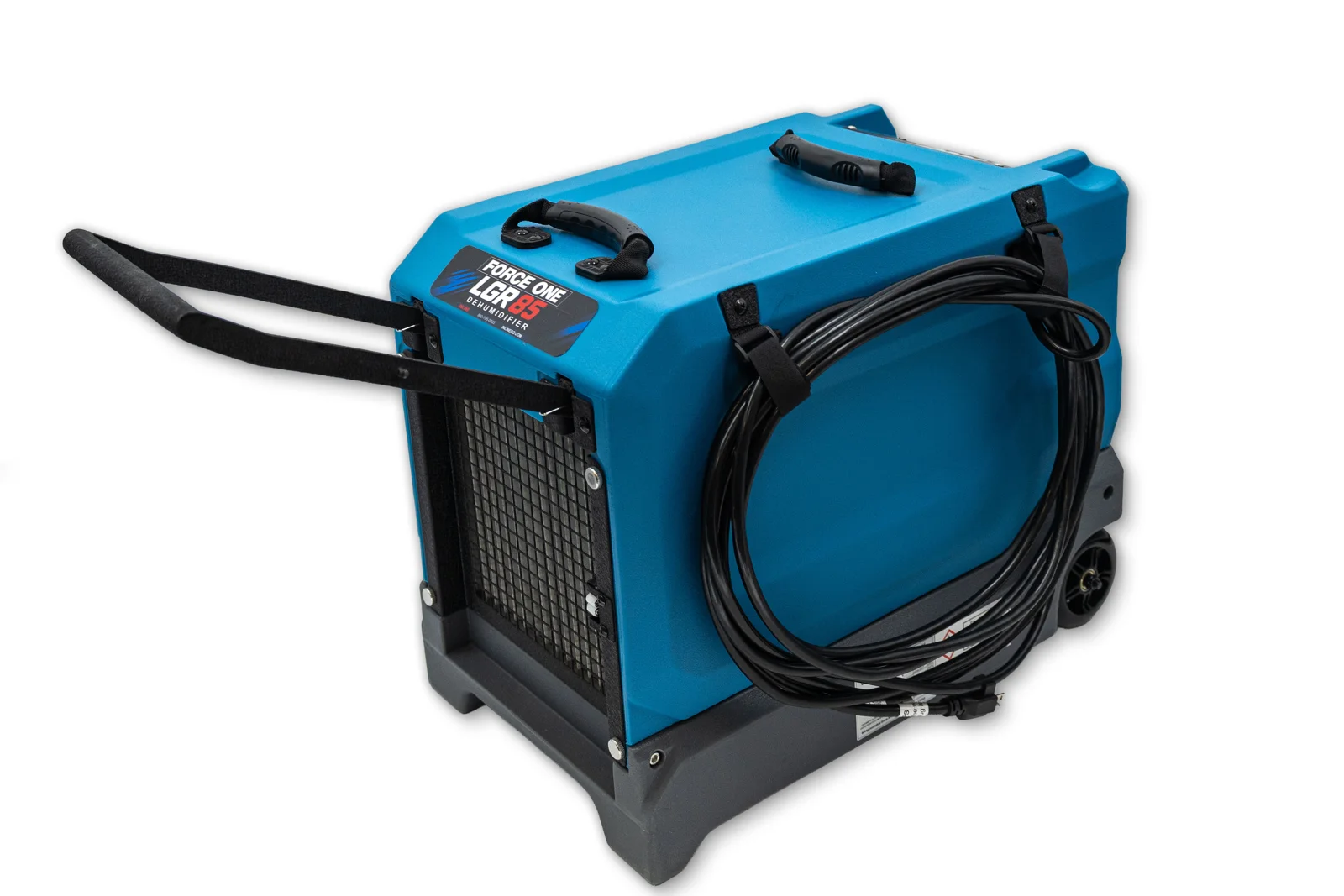
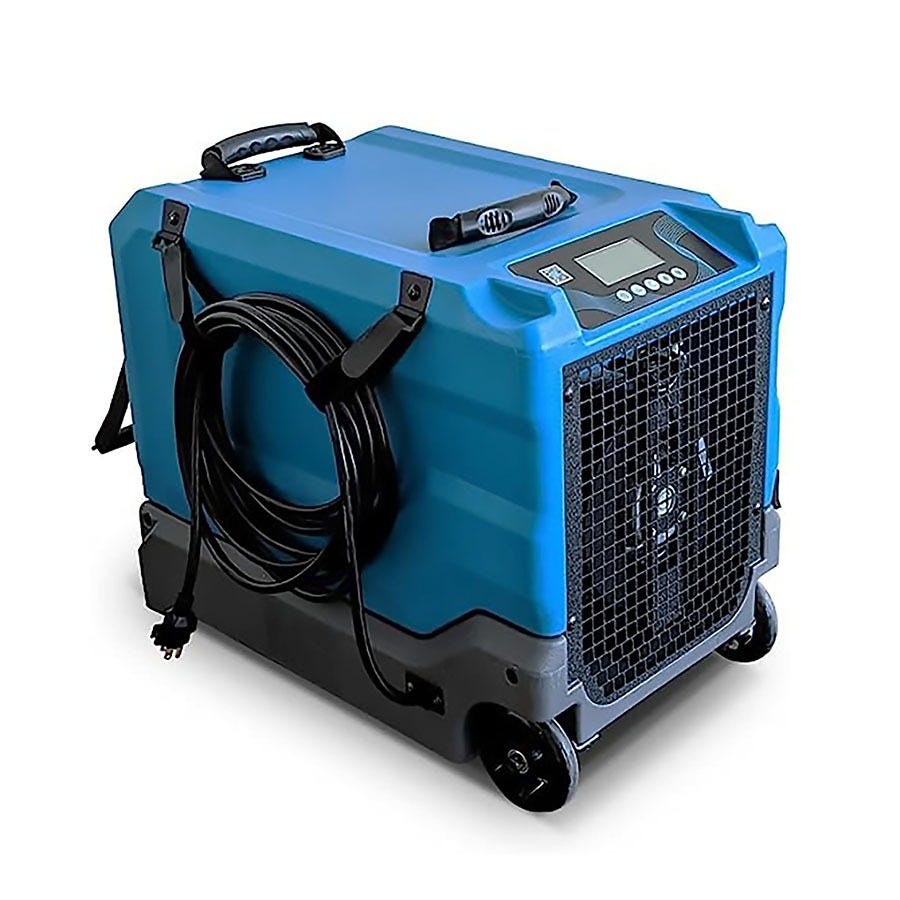
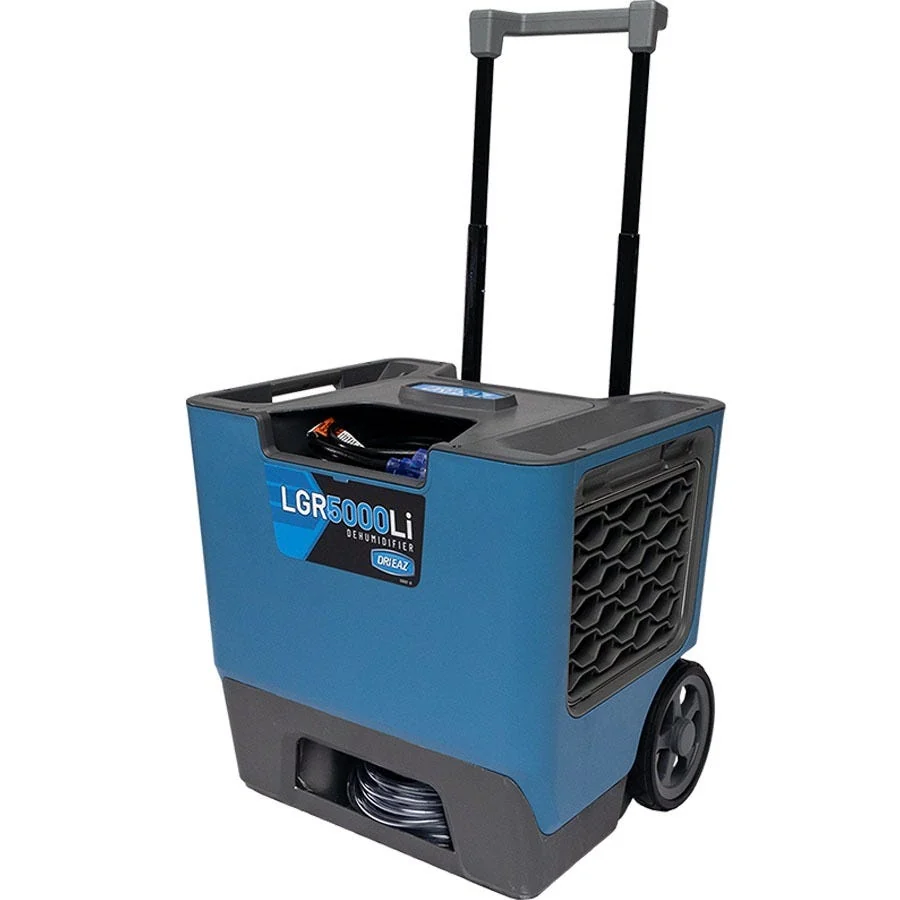
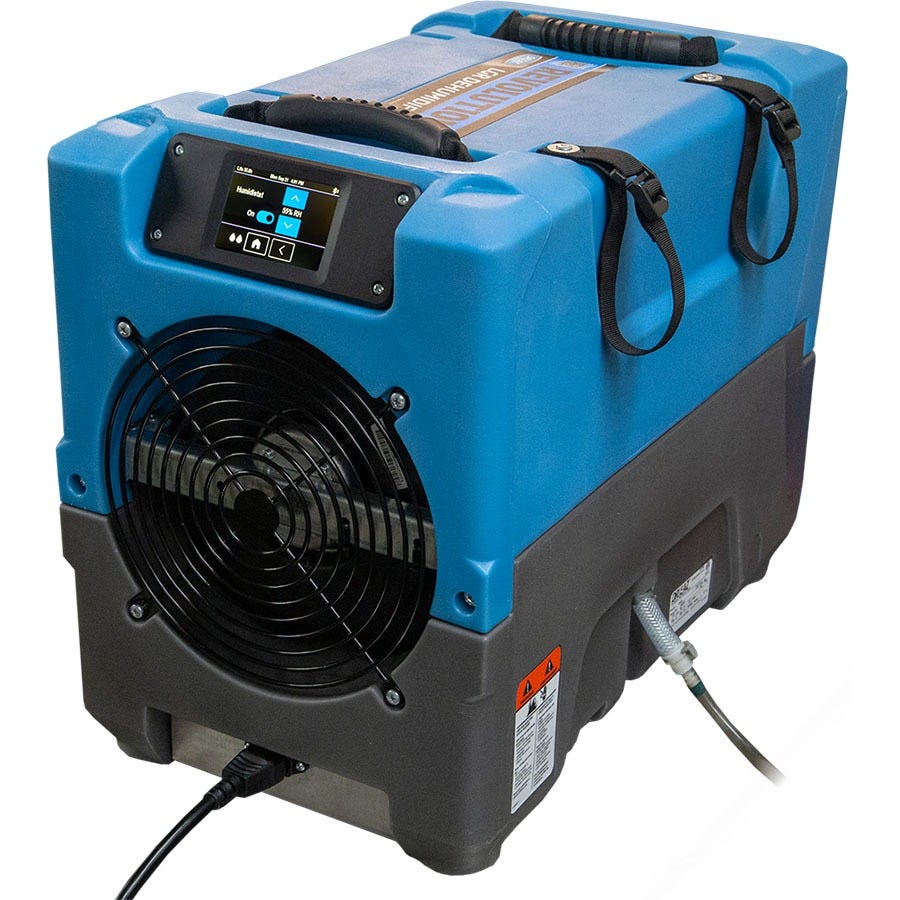
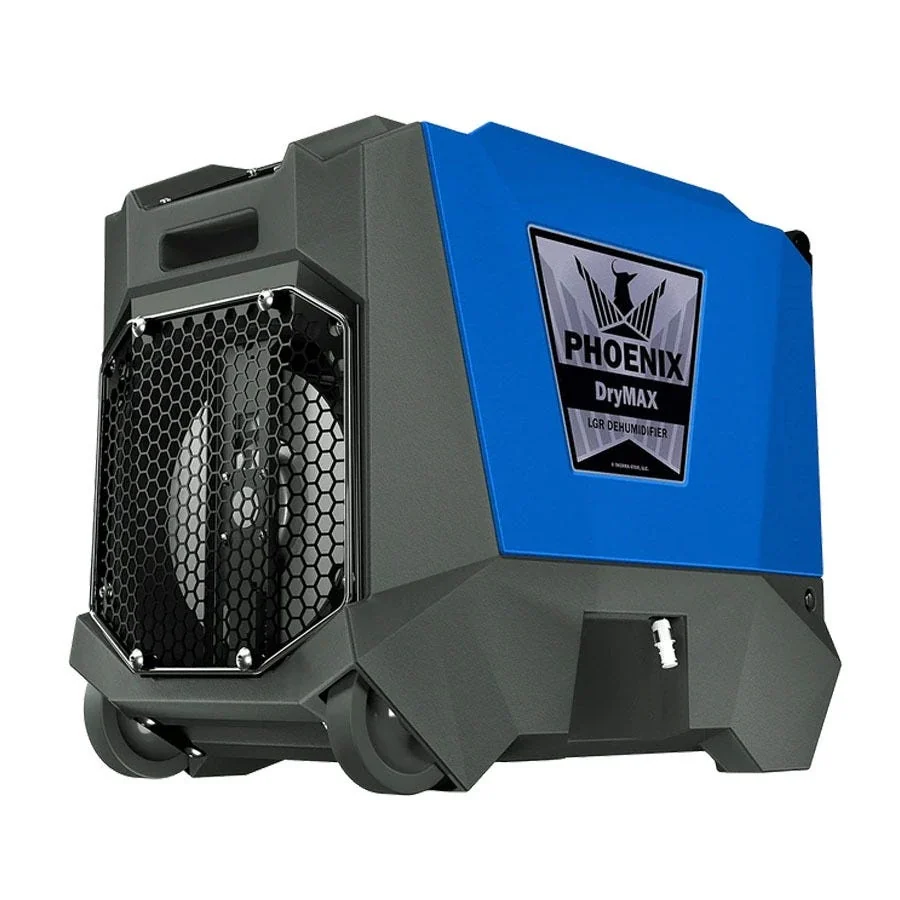
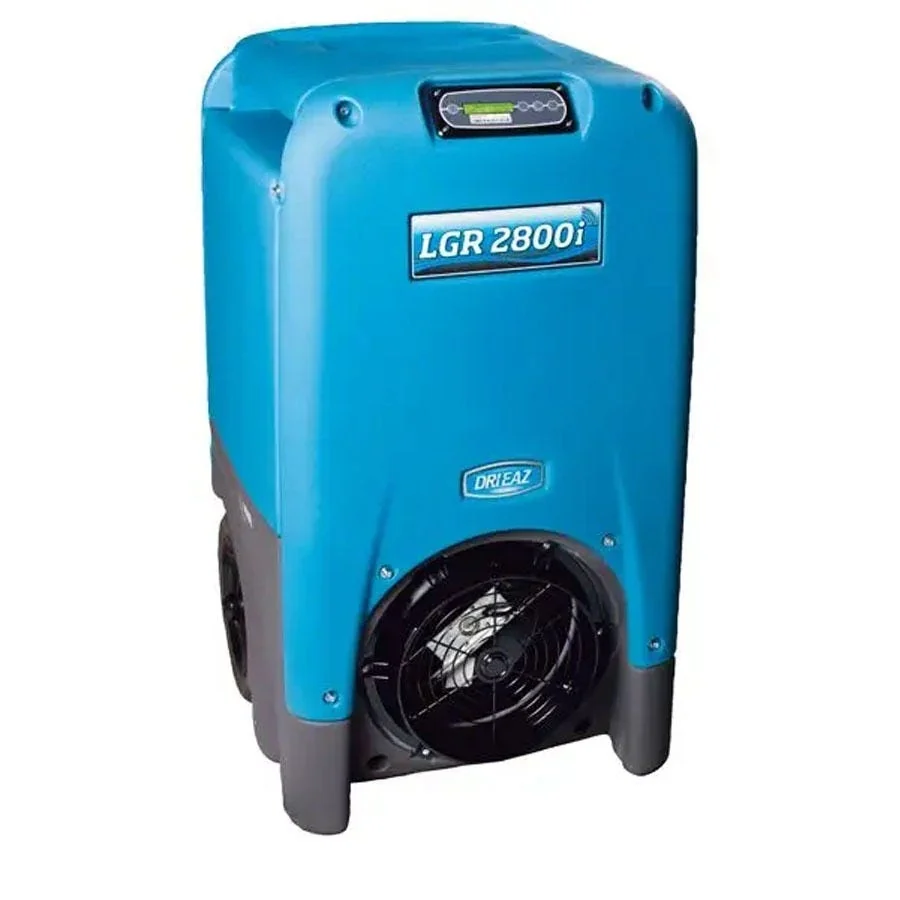
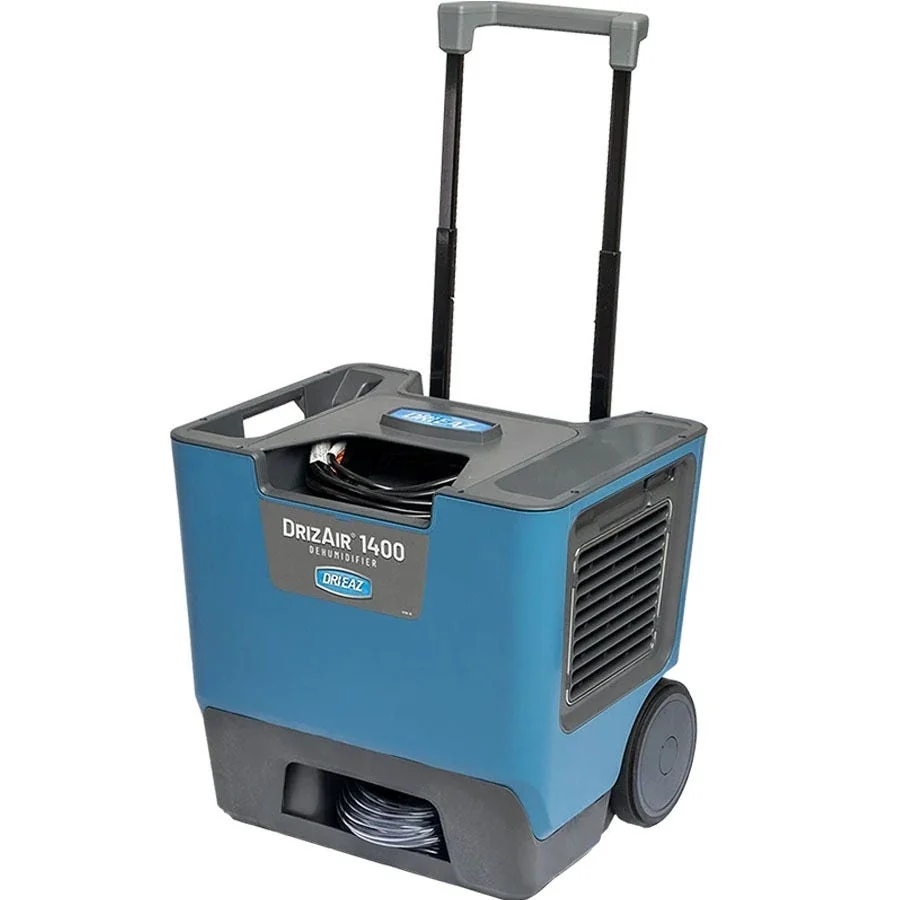
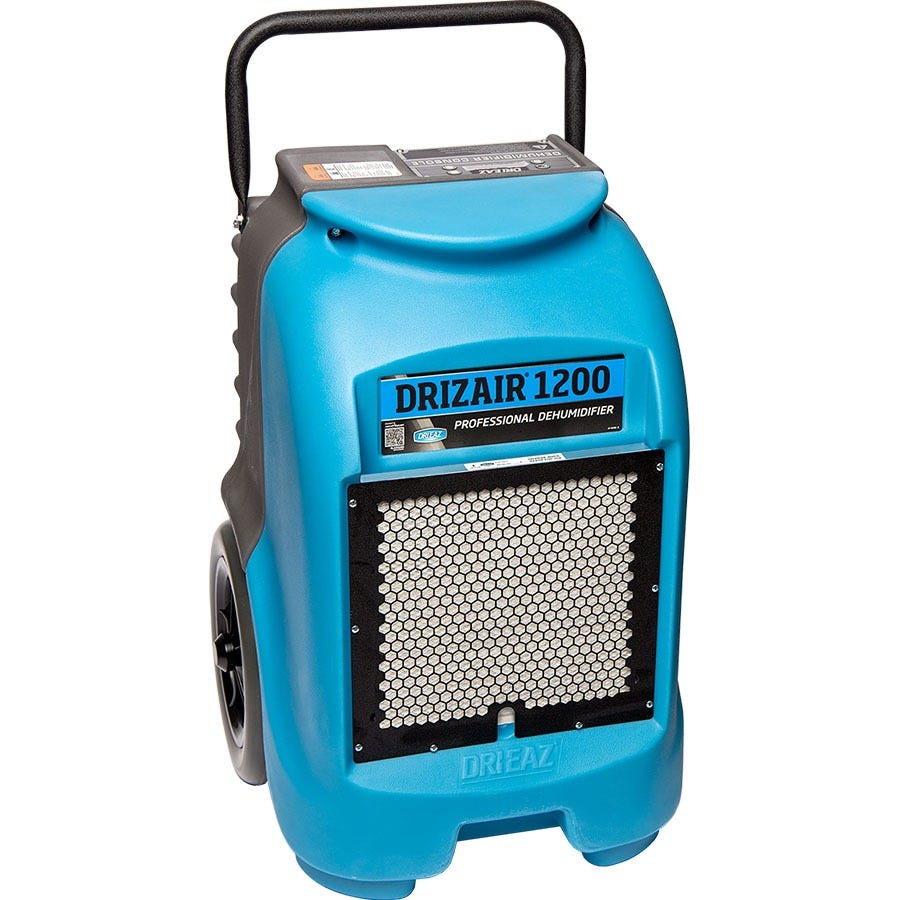
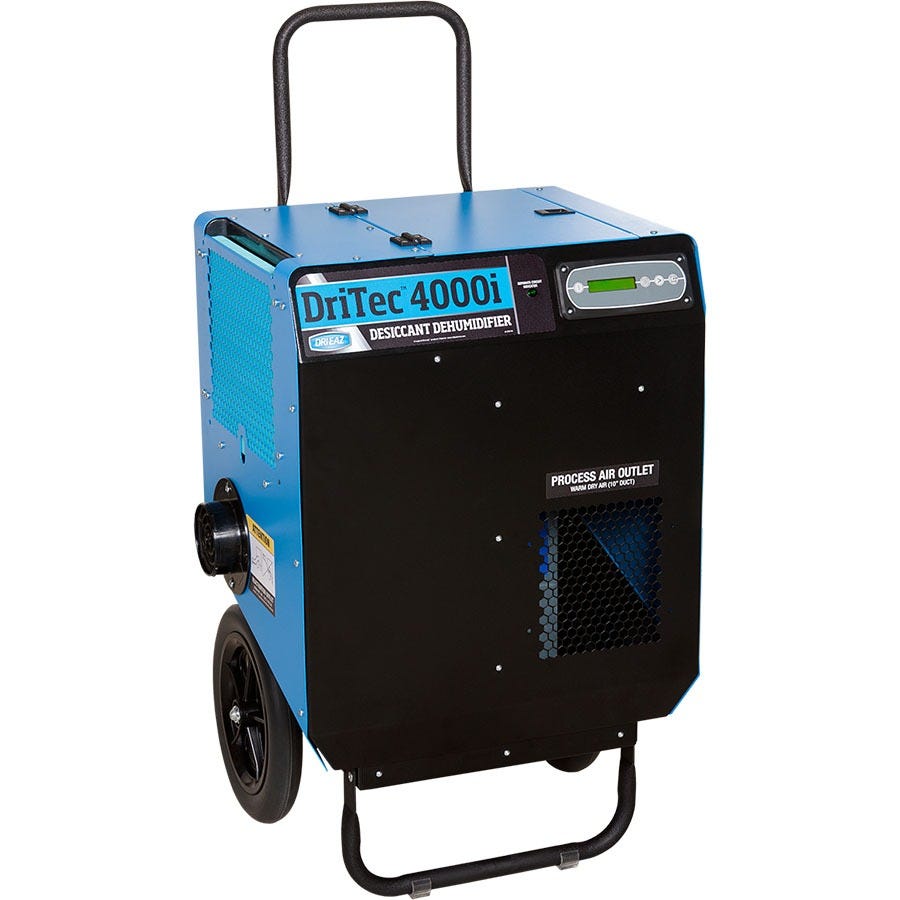
Figures as each maker lists them on the product page. AHAM is the 80°F, 60% RH rating condition; compare units at the same condition, since water removal depends on the temperature and humidity of the space.
Dehumidifier filters and parts
LGR vs desiccant vs conventional dehumidifier for each job condition
All three pull water vapor out of the air; they differ in where they stop working. A conventional refrigerant unit, such as the Dri-Eaz DrizAir 1200, condenses water on a cold coil, and its removal falls off as the air dries because the coil can no longer get far enough below the air's dew point. An LGR unit precools incoming air before the main coil, so it keeps condensing at the low grain levels where a drying job finishes. A desiccant unit, the Dri-Eaz DriTec 4000i, adsorbs vapor into a drying material that is heated to release it, so it does not depend on a cold coil.
The tradeoff is power. Reactivation heat (PTC heaters on the DriTec) costs more energy per pint than an LGR in warm, damp air, so a desiccant earns its place when the air is cold, the materials are dense, or an LGR has stalled.
| Job condition | Type | INLINE example |
|---|---|---|
| Job conditionWarm room, wet carpet, pad and drywall | TypeLGR | INLINE examplePhoenix DryMAX XL, Dri-Eaz LGR 6000Li |
| Job conditionOne room on a shared circuit | TypeCompact LGR or refrigerant | INLINE examplePhoenix DryMAX BLE, Dri-Eaz DrizAir 1400 |
| Job conditionLarge open commercial floor | TypeXL LGR | INLINE exampleDri-Eaz LGR 3500, Phoenix 250 MAX |
| Job conditionHot attic or summer building over 100°F | TypeHigh-temperature LGR | INLINE examplePhoenix 250 MAX (to 125°F) |
| Job conditionUnheated space below about 65°F | TypeDesiccant | INLINE exampleDri-Eaz DriTec 4000i |
| Job conditionHardwood, plaster, slab, heavy timber | TypeDesiccant, or LGR with heat | INLINE exampleDri-Eaz DriTec 4000i |
| Job conditionLGR readings flat for a day | TypeAdd desiccant | INLINE exampleDri-Eaz DriTec 4000i |
AHAM vs saturation pints per day, and ratings with no condition
AHAM is 80°F at 60% RH; saturation is 90°F at 90% RH. Air at the saturation point holds roughly twice the water, about 195 grains per pound against about 93, so saturation figures run near double: the Dri-Eaz DrizAir 1400 lists 64 and 130. Neither is what a unit pulls on day three in a drier chamber. Size and compare on AHAM, and only compare units rated at the same condition.
Some figures carry no test point at all. The LGR 6000Li lists 219 pints and the LGR 7000XLi 235 in high humidity with no temperature or RH given, and the DriTec 4000i lists 118 under standard conditions it does not define. Keep those out of sizing math.
| Unit | AHAM pints | Other figure on its page |
|---|---|---|
| UnitDri-Eaz LGR 5000Li | AHAM pints80 | Other figure on its page164 at saturation |
| UnitINLINE Force One LGR 85 | AHAM pints85 | Other figure on its page154 at saturation |
| UnitDri-Eaz LGR 2800i | AHAM pints130 | Other figure on its page200 at 90°F, 90% RH |
| UnitDri-Eaz LGR 6000Li | AHAM pints100 | Other figure on its page219, high humidity, no test point |
| UnitDri-Eaz LGR 7000XLi | AHAM pints130 | Other figure on its page235, high humidity, no test point |
| UnitPhoenix 250 MAX | AHAM pints145 | Other figure on its page31 gallons maximum, no test point |
| UnitDri-Eaz DriTec 4000i | AHAM pintsNot given | Other figure on its page118, undefined standard conditions |
Pints, CFM and grain depression: why equal ratings dry differently
Pints per day is airflow times grain depression. A working conversion: pints per day equals CFM times grain depression times about 0.0148 (1,440 minutes a day, 0.075 pounds of air per cubic foot, 7,000 grains per pound of water, about 1.04 pounds per pint). Run it backward on INLINE's records. The Dri-Eaz LGR 2800i makes 130 AHAM pints on 160 CFM, about 55 grains of depression. The Phoenix DryMAX XL makes 125 on 300 CFM, about 28 grains.
High airflow turns the chamber's air over faster. Deep depression gives drier outlet air per pass, which pays off when you duct it into a wall cavity, under cabinets or beneath a tented floor. Read inlet and outlet grains per pound with a thermo-hygrometer, or on the display: the LGR 6000Li and 7000XLi show grain depression onboard, and Phoenix DryMAX units log readings to the DryLINK app. When the gap narrows and chamber GPP stops falling day over day, the unit has hit its floor. Add heat, tighten the chamber or bring in a desiccant.
Commercial dehumidifier sizing by cubic feet and class
Measure only the area you close off as the drying chamber: length times width times ceiling height. Assign the class by how much of the combined floor, wall and ceiling surface is wet and how dense it is, then divide cubic feet by the factor below for refrigerant or LGR units, or multiply by air changes per hour and divide by 60 for a desiccant. Round up to whole units. This is the opening setup; first-day readings decide whether to add capacity.
- Class 2 first floor, 30 x 50 ft, 8 ft ceiling: 12,000 cu ft divided by 50 is 240 pints. Two Phoenix DryMAX XL (250) cover it; conventional units at factor 40 would need 300 pints.
- Class 3 basement, 25 x 40 ft, 8 ft: 8,000 cu ft divided by 40 is 200 pints. Two Dri-Eaz LGR 6000Li (200), or a Phoenix 250 MAX with a DryMAX BLE (225).
- Class 3 crawl space, 40 x 50 ft, 3 ft high: 6,000 cu ft times 3, divided by 60, is 300 CFM. One DriTec 4000i at about 395 CFM covers it.
| Class | What is wet | Conventional | LGR | Desiccant ACH |
|---|---|---|---|---|
| Class1 | What is wetUnder about 5% of surfaces, low porosity | Conventional100 | LGR100 | Desiccant ACH1 |
| Class2 | What is wetAbout 5% to 40% of surfaces, carpet and pad | Conventional40 | LGR50 | Desiccant ACH2 |
| Class3 | What is wetOver 40%, often soaked from above | Conventional30 | LGR40 | Desiccant ACH3 |
| Class4 | What is wetDense materials holding deep water | ConventionalNot used | LGR40 | Desiccant ACH3 |
Dehumidifier sizing calculator
Enter the drying chamber you close off, pick the class of water loss and a unit. The math is the method on this page: cubic feet divided by the class factor for refrigerant or LGR units, or cubic feet times air changes per hour divided by 60 for a desiccant.
- Chamber volume
- 12,000 cu ft
- AHAM pints per day needed
- 240
- AHAM pints per day
- Units of this model
- 2
- Phoenix DryMAX XL
- Total amps
- 15.4 A
30 x 50 x 8 ft = 12,000 cu ft. 12,000 divided by 50 = 240 AHAM pints per day.
240 divided by 125 per Phoenix DryMAX XL = 1.92, rounded up to 2.
Circuits at about 80% load (12 A on a 15 A circuit, 16 A on a 20 A): 2 on 15 A circuits (1 per circuit), or 1 on 20 A circuits (2 per circuit). Count the air movers on the same circuits too.
Conventional units at factor 40 would need 300 pints for the same chamber.
Same job with other models
- 2 xDri-Eaz LGR 7000XLi at 130 AHAM pints each, 260 pints in all, 17.6 A total, 2 on 20 A circuits
- 2 xPhoenix R250 at 130 AHAM pints each, 260 pints in all, 14.8 A total, 1 on 20 A circuits
- 2 xPhoenix DryMAX XL Pro at 135 AHAM pints each, 270 pints in all, 13.4 A total, 1 on 20 A circuits
- 2 xPhoenix 250 MAX at 145 AHAM pints each, 290 pints in all, 16.4 A total, 2 on 20 A circuits
This is the opening setup. First-day readings decide whether to add capacity, and units come out as materials reach their dry goal. Size and compare on AHAM pints; a figure with no stated condition is kept out of the count.
See the Phoenix DryMAX XL, or request a quote for this setup.
Using a dehumidifier for mold remediation
A dehumidifier controls moisture; it does not remove mold already growing. Within the remediation plan it lowers relative humidity in the containment and dries framing, sheathing and subfloor left in place, taking away the moisture that fed the growth. The filter on a dehumidifier (Dri-Eaz 4-PRO, Phoenix MERV 10 or MERV 11) protects the coil; it is not a HEPA stage, so it does not take the place of an air scrubber.
Negative air adds a moisture load. A scrubber exhausting 500 CFM out of the containment pulls 500 CFM of make-up air in. If that air comes from outdoors at 80°F and 60% RH (about 93 grains) into a containment held near 55 grains, the load is about 500 x 38 x 0.0148, roughly 280 pints a day, more than any single unit INLINE sells removes at AHAM. Run negative air at the lowest airflow that holds the pressure differential your project specification sets, and draw make-up air from conditioned space where the plan allows.
- Stop the water source first. Drying a wall that is still getting wet only burns days.
- Build containment and start negative air before aggressive airflow. Most plans hold air movers off moldy surfaces until that material is removed or cleaned.
- Set the humidistat to the plan's target. The Dri-Eaz LGR 5000Li, DrizAir 1400, LGR 2800i, LGR 3500 and DriTec 4000i offer humidistat control.
- Run the condensate hose to a drain outside the work area so water never pools inside the containment.
- Confirm framing is dry with a moisture meter before any mold-resistant coating goes on.
- Change the dehumidifier filter before the unit moves to the next job.
Crawl space and basement dehumidifiers after water damage
Height decides what fits through the access: the Dri-Eaz Revolution stands 17.6 in tall, the Phoenix DryMAX XL and DryMAX BLE 17-1/2 in, and the DriTec 4000i runs on its back. Otherwise leave the unit outside and duct in. The DryMAX XL outlet takes two 10 in lay-flat ducts or one 14 in; the 250 MAX takes a 12 in flex intake and 10 in lay-flat supply; the LGR 6000Li and 7000XLi outlets fit 12 in lay-flat.
Check the listed low end against the space. The Revolution, LGR 6000Li, LGR 7000XLi and Phoenix units list 33°F; the INLINE Force One and ASD units list 41°F. Running inside the range is not the same as pulling much water: near the bottom, coils approach freezing and units cycle through defrost. In a cold crawl, the desiccant is the better tool. Below grade, plan the drain first; the LGR 3500's built-in pump pushes through its 40 ft hose even from below-grade spaces, its page says.
How many dehumidifiers per circuit, hose length and filters
Plan on loading a breaker to about 80% of its rating for equipment that runs around the clock: 12 amps on a 15 amp circuit, 16 on a 20. Count the air movers on the same circuit, and remember draw climbs in hot, wet rooms. Water damage restoration equipment works whole rooms through by circuit.
Drain hose: the Dri-Eaz LGR 5000Li, DrizAir 1400, LGR 6000Li, LGR 2800i and LGR 3500 list 40 ft; the Phoenix DryMAX XL and BLE store a 33 ft hose on board; the 250 MAX has an internal pump with 30 ft. Over finished floors, set the unit in a 25 x 25 in, 7 gallon Injectidry Protect-It pan.
Filters: the Dri-Eaz 4-PRO on the Dehumidifier Filters shelf fits the LGR 7000XLi, LGR 5000Li, DrizAir 1400 and DrizAir 1200, with a separate one for the Revolution. Phoenix pleats go by size: 12 x 14 x 1 in MERV 10 for the DryMAX XL and XL Pro, 9 x 12 x 1 in MERV 10 for the BLE, 12 x 12 x 1 in MERV 11 for the R250 and 16 x 20 x 2 in MERV 11 for the 250 MAX.
| Unit | Amps | Per 15 A | Per 20 A |
|---|---|---|---|
| UnitDri-Eaz DrizAir 1400 | Amps4.7 | Per 15 A2 | Per 20 A3 |
| UnitDri-Eaz LGR 5000Li | Amps5.1 | Per 15 A2 | Per 20 A3 |
| UnitPhoenix DryMAX BLE | Amps5.5 | Per 15 A2 | Per 20 A2 |
| UnitINLINE Force One LGR 85 | Amps5.77 | Per 15 A2 | Per 20 A2 |
| UnitDri-Eaz LGR 6000Li | Amps6.5 | Per 15 A1 | Per 20 A2 |
| UnitPhoenix DryMAX XL | Amps7.7 | Per 15 A1 | Per 20 A2 |
| UnitPhoenix 250 MAX | Amps8.2 | Per 15 A1 | Per 20 A1 |
| UnitINLINE Force One LGR 155 | Amps10 | Per 15 A1 | Per 20 A1 |
Dri-Eaz vs Phoenix dehumidifiers, compared by spec
Both lines cover compact to XL LGR sizes; the choice usually comes down to the app your crew already uses, the filters you want to carry and the air movers you run. The Phoenix DryMAX XL Pro lists compatibility with Phoenix AirMAX, AirMAX BLE and Focus II air movers. INLINE's own Force One LGR 85 (85 AHAM pints, 206 CFM, 5.77 amps, 70 lbs) and stackable Force One LGR 155 (155 pints, 300 CFM, 10 amps, 88 lbs) sit alongside both. Compare them all on the LGR dehumidifiers shelf.
| Point | Dri-Eaz | Phoenix |
|---|---|---|
| PointAHAM range | Dri-Eaz64 to 170 pints | Phoenix80 to 145 pints |
| PointMonitoring | Dri-EazCommand Hub, Bluetooth and Wi-Fi on newer units | PhoenixBluetooth, DryLINK app |
| PointFilter | Dri-Eaz4-PRO multi-stage on most | PhoenixMERV 10 or MERV 11 pleated |
| PointRefrigerant | Dri-EazR32 where listed | PhoenixR-410A or R-454B by unit |
| PointTop operating temperature | Dri-Eaz100°F where listed | Phoenix100°F to 125°F |
| PointDrain hose | Dri-Eaz40 ft on most | Phoenix33 ft on DryMAX, 30 ft pump hose on 250 MAX |
Questions contractors ask
Why is the saturation rating on a dehumidifier so much higher than the AHAM rating?
Because air at 90°F and 90% RH holds about twice the water of air at 80°F and 60% RH, so the coil condenses more per hour. The Dri-Eaz LGR 5000Li lists 80 pints at AHAM and 164 at saturation. Real chambers sit nearer AHAM and get drier each day, so size on the AHAM figure.
Is a dehumidifier with a higher pint rating always faster?
No. Pints per day reflects airflow and grain depression at one test condition, and the finish of a job depends on how dry the outlet air stays as the room dries. The Dri-Eaz LGR 2800i makes 130 pints on 160 CFM, so it delivers much drier air per pass than the Phoenix DryMAX XL, which makes 125 pints on 300 CFM.
Which commercial dehumidifiers can be stacked for transport and storage?
The Dri-Eaz LGR 5000Li and DrizAir 1400 move two units together and stack three high for storage, their pages say. The Dri-Eaz Revolution, Phoenix DryMAX XL, DryMAX XL Pro, DryMAX BLE, Phoenix R250 and INLINE Force One LGR 155 also list stackable housings. The Phoenix 250 MAX and Dri-Eaz LGR 6000Li and 7000XLi pages do not.
Can I run a dehumidifier inside a mold containment?
Yes, most remediation setups run one inside the containment to hold humidity at the plan's target while negative air runs. Size it for the humid make-up air the scrubber pulls in, route its hose to a drain outside the work area, and change the dehumidifier filter before the unit goes to another job.
Will a dehumidifier get rid of mold?
No. A dehumidifier lowers relative humidity and dries damp materials, but it does not remove mold already growing on a surface. Remediation also means fixing the water source and removing or cleaning affected material as the plan directs. For discoloration left after cleaning, see the mold and mildew stain removers shelf.
What is the best dehumidifier for mold remediation?
A compact LGR or refrigerant unit with a humidistat suits most containments at room temperature, because it holds a set humidity without overrunning. The Dri-Eaz LGR 5000Li and DrizAir 1400 add app control, and the LGR 2800i and LGR 3500 have automatic humidistats. In cold or already dry air, use the desiccant DriTec 4000i.
Can you over-dry a room with too many dehumidifiers?
Yes. Driving hardwood, plaster or millwork well below its normal moisture content can crack or cup it. Set a humidistat, pull units as materials reach their dry goal, and read unaffected material with a meter for comparison. The DriTec 4000i takes minimum and maximum humidity settings, which its page says help avoid over-drying.
Do I need a dehumidifier with a pump, or will it drain by gravity?
You need a pump whenever the drain sits above the unit or across a long run, which covers most basements and upper floors. Gravity works only with a floor drain or sink lower than the outlet. The Phoenix 250 MAX has an internal pump with 30 ft of hose, the Dri-Eaz LGR 3500 pumps through 40 ft even below grade, and the DryMAX BLE and R250 list condensate pumps.