
Water damage restoration equipment near you
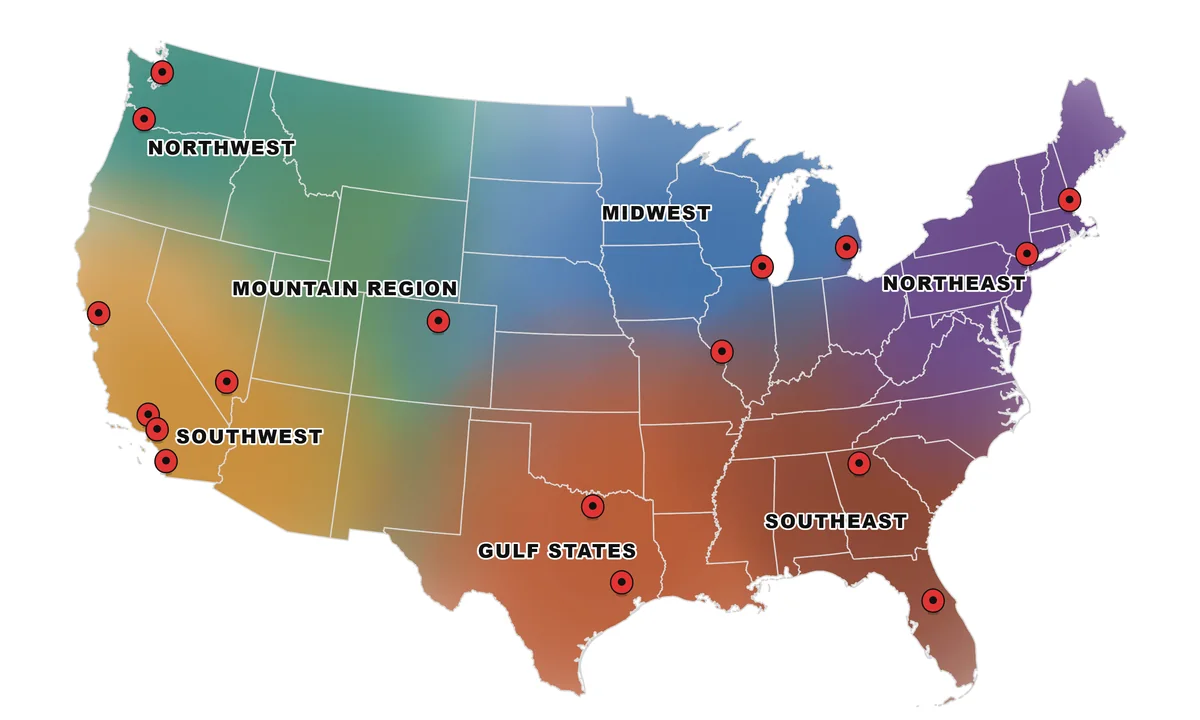
INLINE Distributing sells water damage restoration equipment online and through 17 branches in 13 states: LGR dehumidifiers from Dri-Eaz, Phoenix, ASD and its own Force One line, low profile, centrifugal and axial air movers, flood pumpers and extractors from Dri-Eaz, EDIC and Kleenrite, Injectidry cavity drying packages, and Delmhorst, Protimeter, Tramex and FLIR moisture tools. Order online, send a list through the quote form, or call the order desk at 1-800-795-0933.
Drying equipment calculatorRequest a quoteOrder desk 1-800-795-0933Find a branch
At a glance
- INLINE Distributing has 17 branches in 13 states, including Los Angeles, Seattle, Denver, Dallas, Houston, Chicago, Atlanta, Boston and northern New Jersey.
- The INLINE Force One LGR 85 removes 85 pints per day at AHAM (80°F, 60% RH) on 5.77 amps and weighs 70 lbs.
- The Phoenix AirMAX Radial air mover moves 925 CFM on 1.9 amps and stands 8-7/8 in tall.
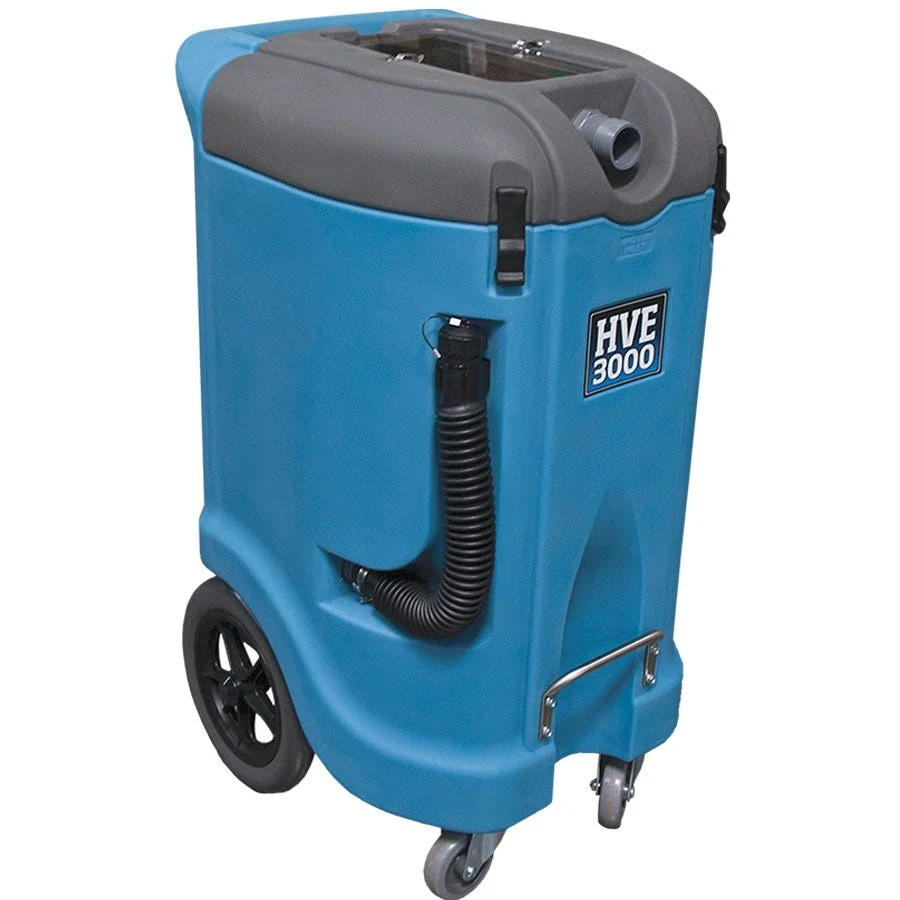
- The Dri-Eaz HVE 3000 flood pumper discharges up to 50 GPM and draws 13.5 A with both vacuum blowers running.
- A common starting point is one air mover per 10 to 16 linear feet of wet wall, with each 20 A circuit held near 16 A.
- Order online, paste or upload part numbers on the Quick Order page, use the quote form, or call 1-800-795-0933. Net-30 for approved business accounts.
Find an INLINE branch near your job
The 17 INLINE branches below are grouped into six regions: West Coast, Mountain West, Texas, Midwest, Northeast and Southeast. Each lists its street address, phone, hours and directions. Several carry a metro name but sit in a nearby town: Dallas is in Arlington, Chicago in Wood Dale, Seattle in Kent and Boston in Woburn. The order desk at 1-800-795-0933 handles orders for every region.
West Coast: Los Angeles, Anaheim, San Diego, Northern California, Portland, Seattle
- Los Angeles14093 Balboa Blvd
Sylmar, CA 913426:30 a.m. to 5:30 p.m. - Anaheim1261 S. State College Pkwy.
Anaheim, CA 928066:00 a.m. to 5:00 p.m. - San Diego3380 Market St.
San Diego, CA 921026:00 a.m. to 4:00 p.m. - Northern California31650 Hayman
Hayward, CA 945446:00 a.m. to 5:00 p.m. - Portland14414 SE Industrial Way
Clackamas, OR 970158:00 a.m. to 5:00 p.m. - Seattle22703 72nd Ave. S. Bldg. Ste. 112
Kent, WA 980326:30 a.m. to 5:00 p.m.
Mountain West: Las Vegas, Denver
- Las Vegas4432 Calimesa St.
Las Vegas, NV 891156:00 a.m. to 4:30 p.m. - Denver485 E. 52nd Ave., Suite A
Denver, CO 802167:00 a.m. to 5:30 p.m.
Texas: Dallas, Houston
- Dallas2821 E. Randol Mill Rd
Arlington, TX 760117:00 a.m. to 5:00 p.m. - Houston11525 Tanyard Creek Drive
Houston, TX 770407:00 a.m. to 5:00 p.m.
Midwest: Chicago, Detroit, Saint Louis
- Chicago1500 N. Michael Drive, Suite 200
Wood Dale, IL 601917:00 a.m. to 4:00 p.m. - Detroit12200 Sears St
Livonia, MI 48150-13276:30 a.m. to 4:00 p.m. - Saint Louis1600 Park 370 Pl., Suite 4
Hazelwood, MO 630427:00 a.m. to 4:00 p.m.
Northeast: Boston, Moonachie
- Boston23 Normac Rd.
Woburn, MA 018017:00 a.m. to 4:00 p.m. - Moonachie200 Carol Place
Moonachie, NJ 070747:30 a.m. to 5:30 p.m.
Southeast: Atlanta, Central Florida
- Atlanta1741 Wilwat Drive, Building A Suite 3
Norcross, GA 300938:00 a.m. to 5:00 p.m. - Central Florida230 Deen Still Road Suite 201
Davenport, FL 338978:00 a.m. to 5:00 p.m.
Water damage restoration equipment checklist by drying task
Each row pairs a drying task with the equipment it takes, the specs that separate one model from the next in that class, and the INLINE shelf to compare them on. Amps show up in almost every row because the job's circuits, not the van, usually cap how much equipment you can run at once.
| Drying task | Equipment | Spec to compare | Shelf |
|---|---|---|---|
| Drying taskRemove standing water | EquipmentGas trash pump | Spec to compareSuction port, 2 or 3 in | ShelfPumps |
| Drying taskExtract carpet, pad and floors | EquipmentFlood pumper or extractor, wand, suction hose, strainers | Spec to compareGPM, water lift, cord count | ShelfWater extraction |
| Drying taskMove air over wet surfaces | EquipmentLow profile, centrifugal and axial air movers | Spec to compareCFM, amps, height | ShelfDrying fans |
| Drying taskPull moisture from the air | EquipmentLGR or desiccant dehumidifier, spare filters | Spec to compareAHAM pints, amps, low temperature limit | ShelfDehumidifiers |
| Drying taskAdd heat in cold buildings | EquipmentElectric drying heater | Spec to compareBTU, CFM, amps | ShelfHeating units |
| Drying taskDry wall cavities and hardwood | EquipmentInjectidry packages, DriForce kits, dehumidifier pans | Spec to compareLinear feet per package, amps | ShelfDrying systems |
| Drying taskFind and track moisture | EquipmentPin, pinless, imaging and concrete meters, carpet probe | Spec to compareMaterial scales, read depth | ShelfMoisture meters |
| Drying taskPower the setup | EquipmentGFCI power blocks, Turtle distribution kit | Spec to compareAmps per outlet, breaker size | ShelfPower and GFCI |
| Drying taskClean the air after tear-out | EquipmentHEPA air scrubber, spare filters | Spec to compareCFM, filter fit | ShelfAir scrubbers |
Water extraction equipment: pumps, flood pumpers and extractors
Water you pull out as liquid never has to pass through a dehumidifier coil. A Force One LGR 85 is rated at 85 pints a day at AHAM conditions, about 10.6 gallons, and removes less as the room dries. Twenty gallons left in a pad is roughly two days of that unit's rated output, so a second extraction pass costs less than an extra drying day.
On sewage or other contaminated water, use a pumper whose pump passes solids, empty the screen basket often and treat hoses and wands as job-dirty. Before the next loss, flush the tank, pump and hoses, then clean them and apply the antimicrobial your job plan calls for.
- Deep water: Multiquip QP2TH and QP3TH gas trash pumps have 2 in and 3 in suction ports. Match hose and strainer to the port, such as a 2 in x 20 ft suction hose and a 2 in steel strainer.
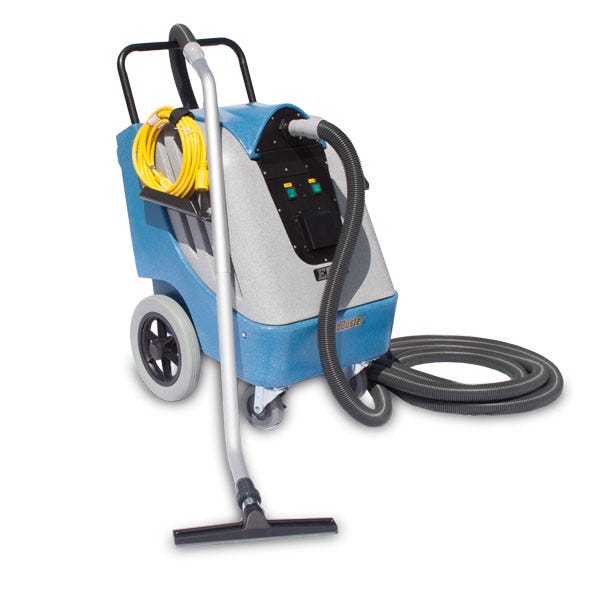
- The EDIC FloodBuster pumps 50 GPM through a sump pump that passes solids up to 1/2 in, runs on one cord and has a stair-climbing handle.
- The Dri-Eaz HVE 3000 lists up to 50 GPM out a 1-1/2 in outlet, a 12 gallon recovery tank and 132 lbs. At 13.5 A with both blowers, give it its own circuit.
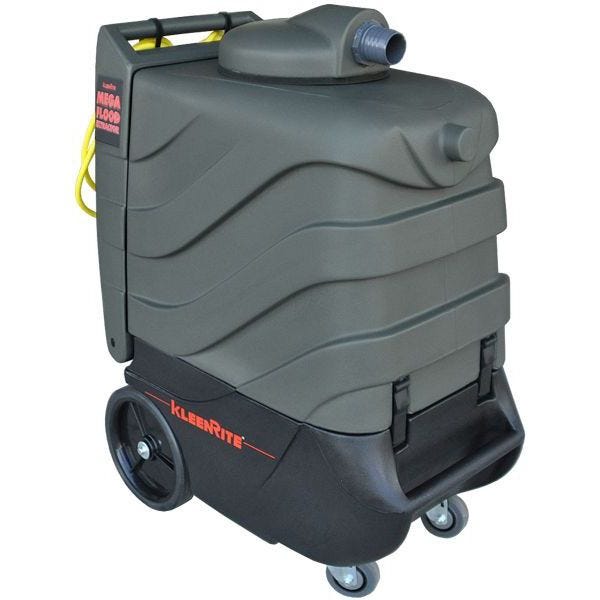
- The Kleenrite Mega 3 lists 202 CFM, 137 inches of water lift and a 20 GPM pump-out. It is a dual-cord machine, so find two separate circuits before you unload it.
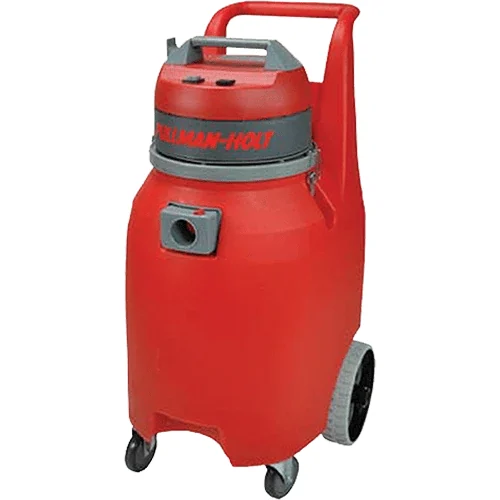
- For small losses and tight rooms, the Pullman-Holt B260865 wet/dry vacuum holds 20 gallons on a 2 HP motor with 110 CFM and a 50 ft cord.
Air movers for water damage: low profile, centrifugal or axial
Count air movers from wet wall length, not floor area. A common starting point is one unit per 10 to 16 linear feet of wet wall, plus one for each closet, cabinet run or offset the main airflow cannot reach. Aim each unit along the wall at the wet base, all running the same direction around the room, so the air sweeps the surface instead of fighting itself.
Use the low end of the range for carpet over a slab and the high end for wet pad, wicking drywall or plaster. Then move units as readings change, rather than adding more.
| Style | Example | Airflow and amps | Best placement |
|---|---|---|---|
| StyleLow profile | ExampleINLINE Force One Low Profile | Airflow and amps750 to 1,000 CFM, 1.8 to 2.0 A, 9.4 in tall | Best placementWall bases, under cabinets, crawlspaces |
| StyleLow profile | ExampleDri-Eaz Velo Pro | Airflow and ampsUp to 885 CFM, 1.2 to 1.9 A | Best placementLarge rooms where circuits are tight |
| StyleCentrifugal | ExampleINLINE Force One Centrifugal | Airflow and amps3,000 to 3,200 FPM, 2.5 A, onboard GFCI | Best placementFloors, stairs, upright on walls |
| StyleCentrifugal | ExampleXPower X-400A | Airflow and amps1,600 CFM, 3 A, 4 drying angles | Best placementCarpet and pad, stacks 4 high |
| StyleAxial | ExampleXPower X-47ATR | Airflow and amps3,600 CFM, 2.8 A, timer | Best placementOpen areas, long walls, ventilation |
- 1. Wet wall base, where the air is aimed
- 2. Air movers aimed along the wall at the wet base, at a shallow angle, all running the same direction around the room
- 3. A common starting point is one air mover per 10 to 16 linear feet of wet wall, plus one for each closet, cabinet run or offset the main airflow cannot reach
- 4. LGR dehumidifier near the center of the room
- 5. Dry air outlet: outlet air well drier than room air means the unit is working
- 6. Condensate hose run out of the room
- 7. Drain outside the work area, so water never pools inside
- 8. Door kept closed, or a poly wall closing off the drying chamber
- 9. Moisture meter check points on the wet materials, read in the same spots each visit
- 10. Reference reading on the same material in an unaffected room, with the same meter and scale: that is your dry goal
Drawn as a 20 x 20 ft room with all four walls wet: 80 linear feet of wet wall and 6 air movers, about 13 ft apart, the same count as the living room row in the circuits table. Schematic, not to scale for the equipment.
LGR or desiccant dehumidifier, and when to add drying heat
An LGR pulls water by condensing it on a cold coil, so output drops as the room cools. Check each unit's low limit: the Force One LGR 85, Force One LGR 155 and ASD-155 list 41 to 110°F, while the Dri-Eaz Revolution and Phoenix DryMAX XL list 33 to 100°F. Near those floors, an LGR runs but removes little.
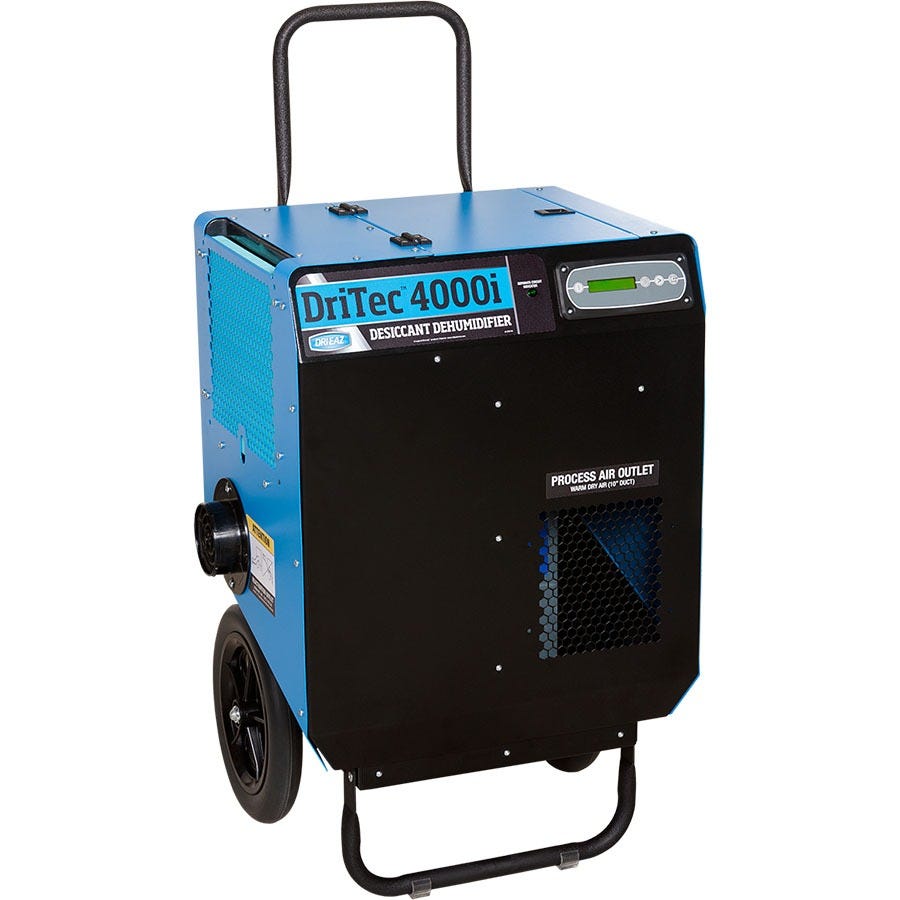
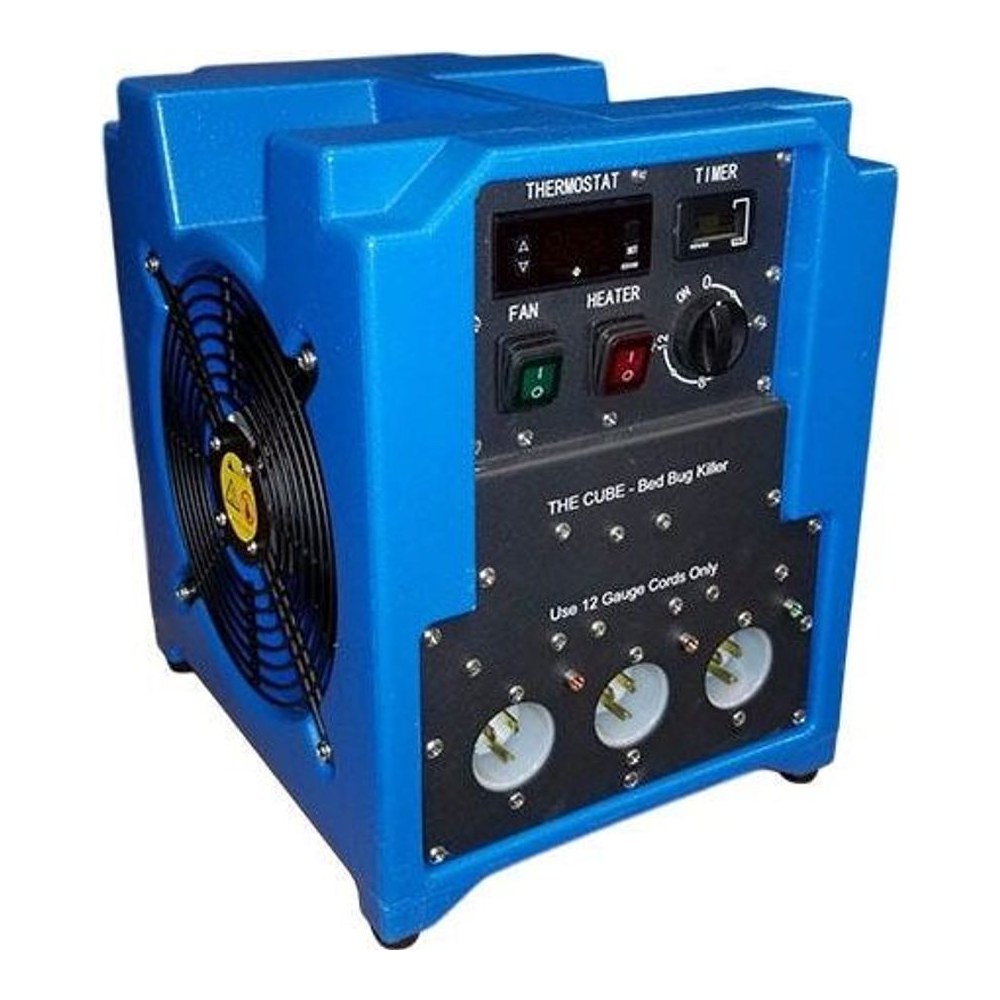
If the drying area will sit cold and you cannot heat it, or dense hardwood or plaster needs very dry air, bring the Dri-Eaz DriTec 4000i desiccant unit, rated at up to 118 pints per day and 395 CFM. Warm air also dries faster: the ASD Cube Heater gives 14,000 BTU at 600 CFM and weighs 19.5 lbs. The Phoenix FireBird Compact 20 steps from 5,000 to 20,000 BTU, one 12 A circuit per 5,000 BTU step, and its listing notes the power cords are not included.
For pints-per-day sizing by room volume, see commercial dehumidifiers for water damage.
Equipment per room and how many circuits it takes
A 120 V, 20 A circuit carries about 16 A of running load at the usual 80 percent margin, and a 15 A circuit about 12 A. Compressor units pull more at startup, so stagger the dehumidifiers on. The worked rooms below use the linear-foot rule and each product's listed amps.
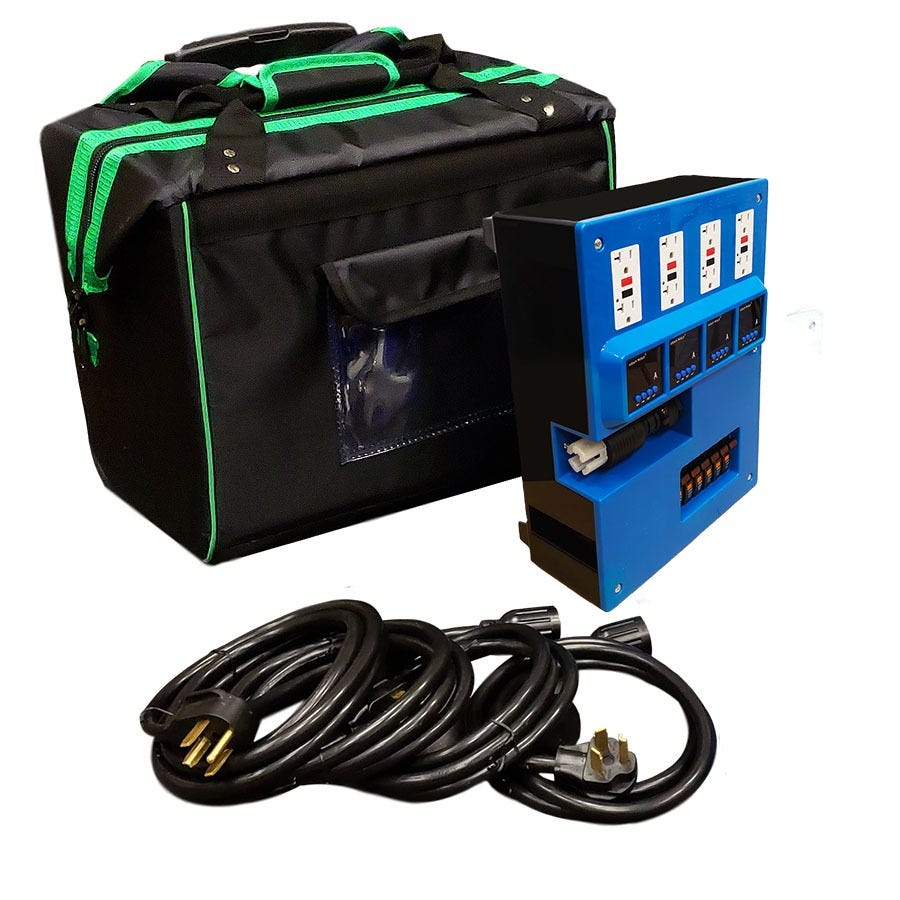
When the house panel cannot carry the load, the ASD Turtle power distribution kit runs from a stove, dryer, range or generator outlet and supplies up to 60 A of 120 V through four GFCI outlets, each with a 15 A breaker and amp meter. Run 12 gauge cords for 50 ft and step to 10 gauge for longer, loaded runs.
| Wet area | Air movers | Dehumidifier | Running amps | 20 A circuits |
|---|---|---|---|---|
| Wet areaBathroom, 5 x 8 ft | Air movers2 Force One Low Profile | DehumidifierShares the next room's LGR | Running ampsAbout 4 A | 20 A circuitsShares one |
| Wet areaBedroom, 12 x 12 ft | Air movers4 Force One Low Profile | DehumidifierForce One LGR 85 | Running ampsAbout 13.8 A | 20 A circuits1 |
| Wet areaHallway, 30 ft, both walls | Air movers5 Velo Pro | DehumidifierShares a nearby LGR | Running ampsAbout 9.5 A | 20 A circuits1 |
| Wet areaLiving room, 20 x 20 ft | Air movers6 Phoenix AirMAX | DehumidifierPhoenix DryMAX XL | Running ampsAbout 19.1 A | 20 A circuits2 |
| Wet areaFinished basement, 30 x 40 ft | Air movers12 Velo Pro | DehumidifierDri-Eaz LGR 7000XLi | Running ampsAbout 31.6 A | 20 A circuits2 to 3, or a Turtle box |
Drying equipment calculator for one room
Enter the wet room and pick your equipment. Air movers are counted from wet wall length, one per 10 to 16 linear feet plus one for each closet, cabinet run or offset. The LGR count uses the class factor from our dehumidifier sizing method, and circuits are held to about 12 A on a 15 A circuit and 16 A on a 20 A.
- Air movers to set
- 7
- Range 5 to 7; high end for this room
- LGR dehumidifiers
- 1
- 35.8 AHAM pints needed, INLINE Force One LGR 85
- Running amps
- 19.77 A
- At each unit's listed amps
- Circuits needed
- 2 x 20 A
- Or 2 circuits of 15 A
Wet wall 14 + 16 + 14 + 16 = 60 ft. 60 / 16 = 4 and 60 / 10 = 6, rounded up, plus 1 for closets and offsets = 5 to 7; plan 7. Chamber 14 x 16 x 8 = 1,792 cu ft / 50 (class 2) = 35.8 AHAM pints / 85 per INLINE Force One LGR 85 = 1, rounded up. Amps 7 x 2 + 1 x 5.77 = 19.77 A.
How it splits across 20 A circuits
- Circuit 1INLINE Force One LGR 85 and 5 air movers, 15.77 A
- Circuit 22 air movers, 4 A
Compressor units pull more at startup, so stagger the dehumidifiers on. Draw climbs in hot, wet rooms.
Equipment list for this room
- 7INLINE Force One Low Profile air mover1,000 CFM high, 750 CFM low, 2.0 A high, 1.8 A low
- 1INLINE Force One LGR 85 LGR dehumidifier85 AHAM pints per day, 5.77 A
- 1Spare dehumidifier filterOne for each unit, changed before it moves to the next job
- 212 gauge extension cordOne per circuit for runs up to 50 ft; step to 10 gauge for longer, loaded runs
- 2GFCI power blockOne per circuit
- 1Moisture meter and thermo-hygrometerReference reading on dry material, then daily readings in the room, outside and at the dehumidifier outlet
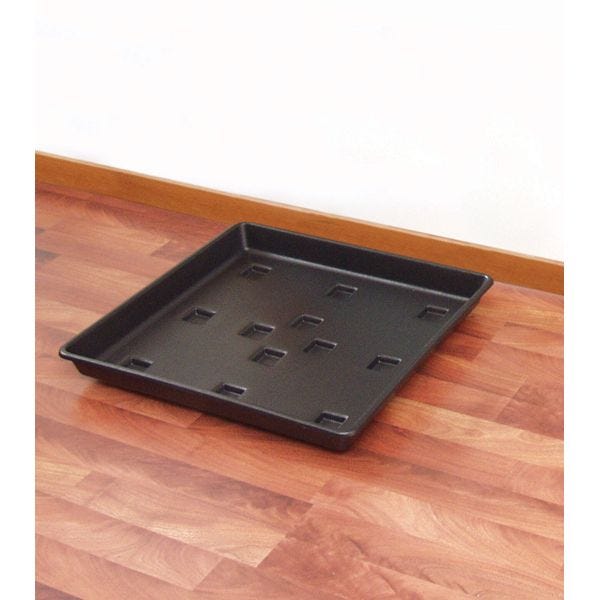
- If neededInjectidry Protect-It dehumidifier panOne under each unit set above a finished floor
- If neededASD Turtle power distribution kitWhen the house panel cannot carry the load: up to 60 A of 120 V through four GFCI outlets
This is the opening setup. Aim each air mover along the wall at the wet base, all running the same direction around the room. Then move units as readings change, rather than adding more, and let first-day readings decide whether the room needs more dehumidifier capacity. Your project specification and the readings on site decide the job.
Moisture meters and monitoring tools for drying jobs
One meter does not cover every material. Map the wet area with a pinless or thermal scan, confirm with pins, and take a reference reading on the same material in an unaffected room with the same meter and scale. That reference is your dry goal. Log temperature and relative humidity daily in the drying area, outside and at the dehumidifier outlet; outlet air well drier than room air means the unit is working.
| Tool | INLINE example | What it reads | Use it for |
|---|---|---|---|
| ToolPin and scan meter | INLINE exampleDelmhorst Navigator Pro | What it readsWood 5 to 60% MC, drywall 0.1 to 6%, scan 0 to 300 | Use it forMapping walls, then confirming |
| ToolImaging moisture meter | INLINE exampleFLIR MR176 | What it reads80 x 60 thermal, pin 7 to 30% MC, pinless to 0.75 in | Use it forFinding wet edges with one tool |
| ToolThermal camera | INLINE exampleFLIR E6 | What it reads160 x 120 IR, under 0.06°C sensitivity | Use it forFast scans of ceilings and long walls |
| ToolThermo-hygrometer | INLINE exampleTramex 8703 | What it reads5 to 95% RH, -4 to 122°F | Use it forDaily chamber and outlet readings |
| ToolCarpet probe | INLINE exampleDri-Eaz HydroSensor I | What it readsAlerts above 17%, 31 in reach | Use it forWet pad edges, read standing up |
| ToolConcrete meter | INLINE exampleTramex CME4 | What it reads0 to 6% in concrete, 3/4 in deep | Use it forSlabs before new flooring |
What equipment to buy first for a water damage restoration company
Buy in the order jobs force you to: a missing meter or extractor stops a job, while a short air mover count only slows it. Stackable units matter early, because van space runs out before budget does.
- First truck: a combination moisture meter and thermo-hygrometer, one flood extractor and wand, 8 to 10 low profile air movers, and 2 compact LGRs such as the 70 lb Force One LGR 85.
- Also first: 12 gauge cords, GFCI power blocks, an Injectidry Protect-It pan for units above finished floors, and spare dehumidifier filters.
- Second wave: a large LGR such as the Force One LGR 155 (155 pints at AHAM, 10 A, 88 lbs), a thermal camera, and an Injectidry wall and ceiling package rated for 100 linear feet.
- Commercial and storm work: trash pumps with hose and strainers, a flood pumper, a desiccant unit, drying heaters, a power distribution box and a HEPA air scrubber.
Where to buy water damage restoration equipment near you
INLINE Distributing sells to restoration contractors online and through 17 branches in 13 states, listed by region below. Heavy shipments, such as two 106 lb LGR 7000XLi units or a full air mover order, get an LTL Freight option at checkout.
For a full drying package, send a list through Request a Quote, paste or upload part numbers on the Quick Order page, or call the order desk at 1-800-795-0933. Net-30 terms are available for approved business accounts, and equipment financing runs through INLINE's financing partner.
Products mentioned on this page
 KleenRite EquipmentKleenrite Mega 3 Flood Extractor with Auto Dump
Questions contractors ask
Where can I buy water damage restoration equipment near me?
You can buy it from INLINE Distributing, online or through its 17 branches in 13 states. Branches sit in or near Los Angeles, Anaheim, San Diego, Hayward, Portland, Seattle, Las Vegas, Denver, Dallas, Houston, Chicago, Detroit, Saint Louis, Boston, northern New Jersey, Atlanta and Central Florida. The order desk at 1-800-795-0933 takes orders for every region.
How many circuits do I need for a three-room water damage job?
Plan on at least two 20 A circuits for the drying equipment in three wet rooms with one large LGR, plus a third for an extractor or heater. Add the listed amps of every air mover and dehumidifier, then divide by about 16 A per circuit. Twelve low profile units at 2 A plus a Phoenix DryMAX XL at 7.7 A come to about 31.7 A. Bedrooms often share one breaker, so map outlets first.
What gauge extension cord should I use for air movers and dehumidifiers?
Use 12 gauge cord for runs up to 50 ft and 10 gauge for longer runs carrying a loaded circuit. Thinner cord drops voltage under load, which makes compressors in LGR units run hot and can trip them. Keep each cord to one circuit's worth of equipment, about 16 A on a 20 A breaker, and uncoil a cord before you load it. Compare lengths on the extension cords shelf.
Can I use the same extractor on sewage losses and clean water jobs?
Yes, if you clean it fully between jobs, but many crews keep a dedicated machine or hose set for contaminated water. Choose a pumper whose pump passes solids, such as the EDIC FloodBuster, which handles up to 1/2 in spherical solids and catches debris in a removable screen basket. After the job, flush the tank, pump and hoses, then clean and treat them per your job plan.
Do I need a thermal camera if I already own a moisture meter?
You need one to find water fast, not to prove it. A thermal camera shows temperature differences that point to wet areas across a whole ceiling, and a meter then confirms each spot. The FLIR E6 gives a 160 x 120 image; the FLIR MR176 combines an 80 x 60 thermal image with pin and pinless meters. Compare tools on the thermal imaging cameras shelf.
When can I pull the drying equipment off a water damage job?
Pull equipment when every wet material reads at its dry goal, usually the reading from the same material in an unaffected room, taken with the same meter and scale. Pull air movers from dry areas first, and leave the dehumidifier running until the last wet material reaches its goal, so the room air does not rewet what is already dry.
Do extractor hoses and wands fit machines from other brands?
Often, if the hose diameter and cuff match, but check before you buy. The Kleenrite Mega 3 uses 2 in internal plumbing and comes with 25 ft of 2 in vacuum hose, while the EDIC FloodBuster takes 2 in or 1.5 in hose adapters. Confirm the wand's hose size against your extractor's inlet before you order.
Can I finance dehumidifiers and air movers?
Yes, through INLINE's financing partner, which offers lease and finance programs that cover air movers and dehumidifiers. The application runs on the partner's portal, reached from the equipment financing page, and the partner makes the credit decision. Net-30 terms on an INLINE business account are a separate request, started through the quote form.