
OSHA's respirable crystalline silica standard for construction has been on the books since 2016, but the enforcement posture around it has sharpened. The permissible exposure limit is 50 micrograms per cubic meter of air as an 8-hour time-weighted average, with an action level of 25 µg/m³ that triggers additional monitoring and protective measures well before a crew reaches the actual limit. As of 2025, penalties for violations reach $16,550 per serious citation and $165,514 per willful or repeated one — and critically, instance-by-instance citation authority means each exposed worker, or each day a violation persists, can constitute a separate penalty rather than a single fine per inspection.
That distinction matters more than the headline dollar figures. A single-fine model lets a contractor treat a citation as a cost of doing business, priced once and absorbed. Instance-by-instance citations don't behave that way — the exposure of a five-person crew over a multi-day demo job can multiply a single violation into a five-figure or six-figure event fast, in a way that's much harder to model as an acceptable risk going in.
A recent case shows the pattern
OSHA's July 2025 enforcement action against a Georgia countertop fabricator is a useful template for what an inspection actually finds when it goes looking: seven serious citations covering high airborne silica concentrations, failure to require respirator use, failure to conduct fit testing and training for the respirators that were supposed to be in use, no air monitoring program, and no hearing conservation program. None of those findings are exotic — they're the standard checklist of what a respiratory protection program is supposed to include, cited together because none of the individual pieces existed on their own.
"Employers exposing workers to hazardous levels of crystalline silica without requiring respirators, fit testing, training, or air monitoring — that combination is what turns a single citation into seven."
— Paraphrased from OSHA's July 2025 enforcement release, Atlanta area office
The engineering-controls-first logic behind the silica standard — wet cutting methods, dust-collection-equipped tools, and respiratory protection as the last line of defense rather than the only line — is the same logic restoration and abatement contractors already apply to asbestos work under older OSHA standards. That overlap is worth noticing: crews that already run disciplined containment and PPE protocols for ACM work are, in practice, closer to silica compliance than crews encountering engineering controls for the first time on a concrete-cutting job.
Air monitoring and engineering controls come first under the standard — but respirator, fit, and training records are the documented layer inspectors check next.
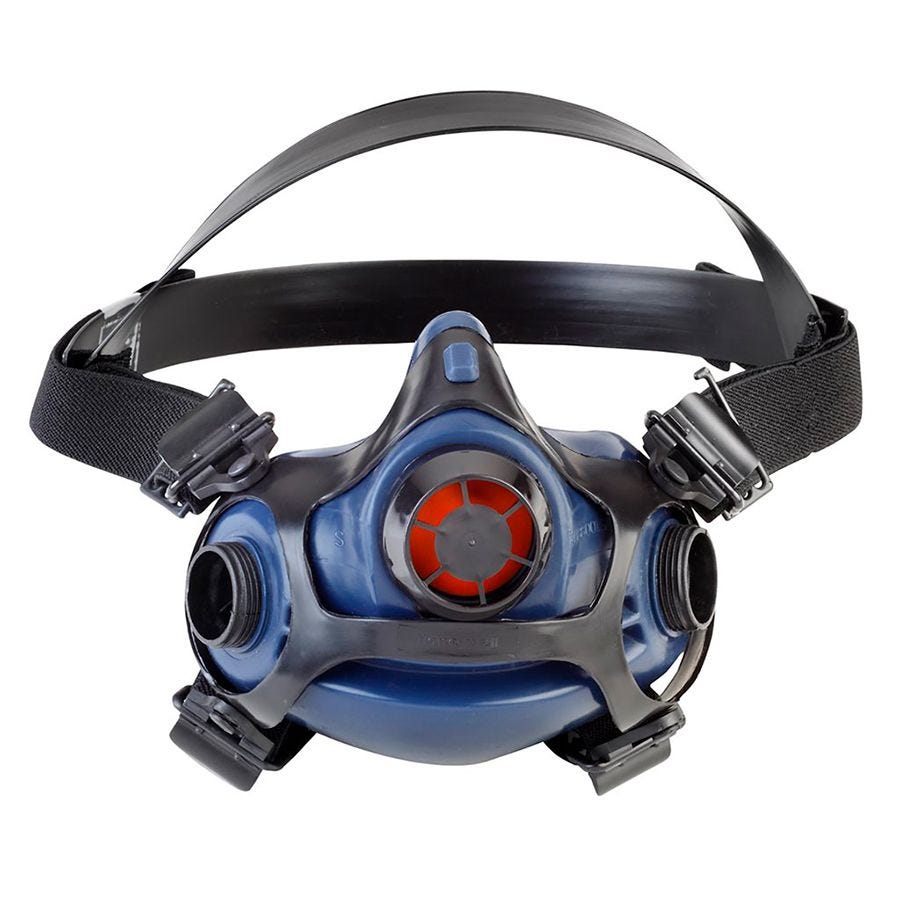
The strategic read for contractors isn't just "don't get fined" — it's that instance-by-instance enforcement rewards documentation almost as much as it rewards actual exposure control. A crew that can produce fit-test records, training sign-offs, and air-monitoring logs on request is defending against a very different exposure than a crew that has the right respirators on the truck but no paper trail proving they were fitted, trained on, and actually worn. In an enforcement environment where penalties multiply per worker and per day, the paperwork isn't the boring part of the program — it's the part that determines whether one violation stays one violation.